
A Global Perspective on a Cornerstone Duplex Alloy
EN 1.4462 (designated X2CrNiMoN22-5-3, also known as 2205 duplex stainless steel, corresponding to UNS S31803/S32205) is a standard nitrogen-alloyed austenitic-ferritic duplex stainless steel, balancing high strength, excellent pitting & chloride stress corrosion cracking resistance, good weldability, and cost-effectiveness for moderately corrosive environments like chemical processing, oil & gas, and marine applications.
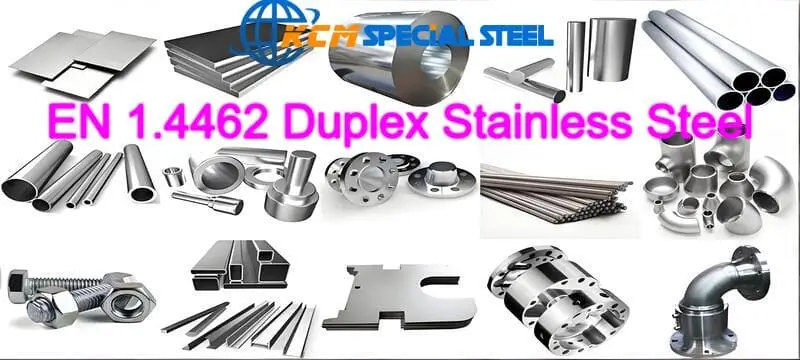
EN 1.4462 duplex stainless steel, widely recognized as 2205, has become a truly global engineering material. Its balanced dual‑phase structure offers a rare combination of high strength and outstanding corrosion resistance. This article explores the alloy from an international viewpoint, highlighting its equivalent grades across major standards, and then examines its full product range. We will cover pipes, fittings, flanges, valves, plates, bars, and structural profiles in detail.
Across the world, engineers specify this alloy under different names. Yet the underlying metallurgy remains remarkably consistent. The ferrite‑austenite balance, typically around 50/50, is the key to its performance. This balanced microstructure suppresses grain growth during welding and resists chloride attack. The result is a material that performs reliably in the harshest industrial environments on earth.
International Equivalent Grades
Before delving into product forms, it is vital to understand how EN 1.4462 is designated in other standards. The table below presents the most common international equivalents. This helps procurement teams source material globally without confusion.
Table 1: International Equivalent Grades of EN 1.4462
| Standard / Region | Designation |
|---|---|
| EN (Europe) | X2CrNiMoN22‑5‑3 / 1.4462 |
| UNS (USA) | S31803 (original) / S32205 (enhanced) |
| AISI (USA) | 318 LN |
| ASTM (USA) | F51 (castings), F60 (wrought) |
| JIS (Japan) | SUS 329J3L |
| GB (China) | 022Cr22Ni5Mo3N / S22053 |
| Trade Name | SAF 2205®, Alloy 2205, Duplex 2205 |
| ISO | 4462‑318‑03‑I |
It is worth noting that UNS S32205 represents a tighter chemistry version with higher nitrogen, ensuring better weldability and phase balance. Most modern EN 1.4462 duplex stainless steel products now meet the S32205 specification. This dual‑certification practice is common in the global market.
1.4462 Duplex Stainless Steel Chemical Composition
The carefully tuned chemistry of EN 1.4462 is what makes its dual‑phase structure possible. Chromium and molybdenum provide corrosion resistance, while nickel and nitrogen stabilize the austenite phase.
Table 2: Chemical Composition of EN 1.4462
| Element | Weight % |
|---|---|
| Carbon (C) | ≤ 0.030 |
| Manganese (Mn) | ≤ 2.00 |
| Silicon (Si) | ≤ 1.00 |
| Phosphorus (P) | ≤ 0.035 |
| Sulfur (S) | ≤ 0.015 |
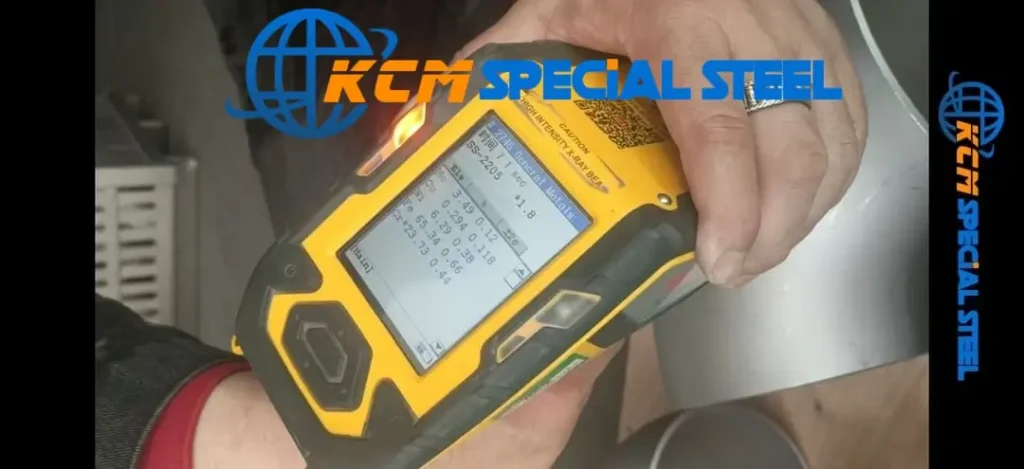
| Chromium (Cr) | 21.0 – 23.0 |
| Nickel (Ni) | 4.5 – 6.5 |
| Molybdenum (Mo) | 2.5 – 3.5 |
| Nitrogen (N) | 0.10 – 0.22 |
| Iron (Fe) | Balance |
The role of nitrogen cannot be overstated. It increases pitting resistance, delays sigma‑phase precipitation, and strengthens the austenite. This is why 1.4462 duplex stainless steel outperforms lean duplex grades in warm chloride solutions. The PREN value typically exceeds .
EN 1.4462 Duplex Stainless Steel Physical Properties
Physical characteristics determine how a material behaves during fabrication and in service. The density of EN 1.4462 duplex stainless steel is approximately 7.8 g/cm³. This density value is similar to most standard stainless steels, yet the strength‑to‑density ratio is far superior. The relatively low density combined with high yield strength allows significant weight savings.
Table 3: Physical Properties of EN 1.4462
| Property | Value |
|---|---|
| Density | 7.8 g/cm³ |
| Elastic modulus | 200 GPa |
| Thermal conductivity | 19 W/m·K |
| Specific heat | 480 J/kg·K |
| Electrical resistivity | 0.80 µΩ·m |
| Thermal expansion (20‑100 °C) | 13.0 × 10⁻⁶ /K |
| Magnetic permeability | Ferromagnetic |
| Melting range | 1420 – 1465 °C |
The thermal expansion coefficient is markedly lower than that of 304L. This minimizes distortion during welding and reduces thermal fatigue in cyclic service. Furthermore, the high thermal conductivity improves heat exchanger efficiency. The density of the material, at 7.8 g/cm³, remains stable across the full temperature range of application.
EN1.4462 Duplex Stainless Steel Mechanical Properties
Mechanical strength is the defining advantage of duplex stainless steel. The yield strength is roughly double that of conventional austenitic grades. This allows engineers to design thinner sections without sacrificing safety margins.
Table 4: Mechanical Properties of EN 1.4462
| Property | Value |
|---|---|
| Yield strength, Rp0.2 | ≥ 450 MPa |
| Tensile strength, Rm | 650 – 880 MPa |
| Elongation, A5 | ≥ 25 % |
| Hardness, HB | ≤ 270 |
| Impact toughness, 20 °C | ≥ 100 J |
| Fatigue limit (approx.) | 400 MPa |
| Shear modulus | 77 GPa |
The excellent toughness at sub‑zero temperatures makes 1.4462 duplex stainless steel suitable for arctic applications. When combined with its low density, the specific strength of this alloy is truly impressive. This matters in offshore platforms where every kilogram of weight saved reduces structural cost.
EN 1.4462 Duplex Stainless Steel Product Forms and Applications
Product Forms and Applications
The versatility of EN 1.4462 is best demonstrated through its extensive product range. Each form is engineered to meet specific industrial needs. Let us explore each product category in turn.
EN 1.4462 Duplex Stainless Steel Pipes and Tubes
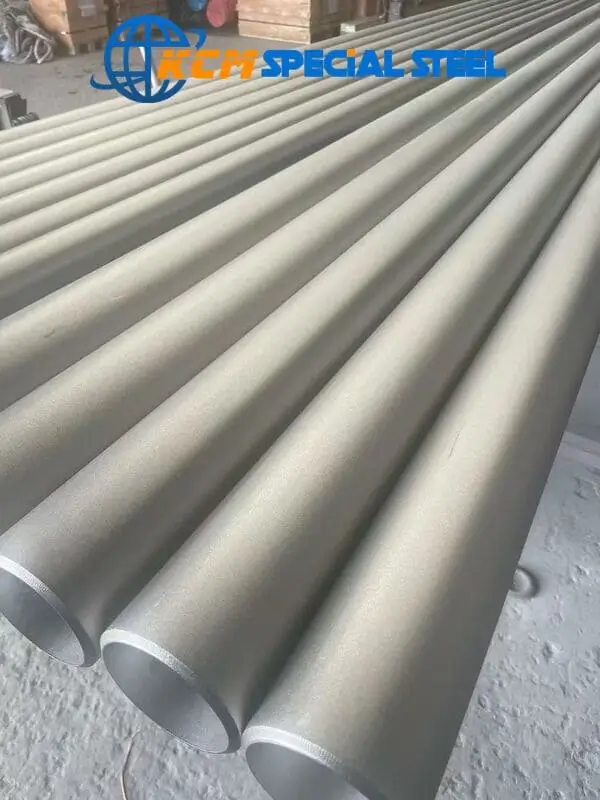
1.4462 duplex stainless steel pipe is the backbone of corrosive fluid transport. Seamless pipes are produced by hot extrusion or pilgering. Welded pipes are fabricated from hot‑rolled coil and longitudinally welded. The high strength allows thinner walls, reducing material cost and weight. These pipes are indispensable in offshore risers, hydraulic lines, and chemical process piping.
For subsea applications, 1.4462 duplex stainless steel pipe is often specified with a PREN minimum of 34. The density of the pipe material influences the overall weight of the pipeline system. Lighter pipes reduce buoyancy requirements and installation costs. This is a key advantage in deep‑water oil and gas projects.
EN 1.4462 Duplex Stainless Steel Pipe Fittings
A complete piping system requires a full suite of 1.4462 duplex stainless steel pipe fittings. Each fitting type serves a unique function in directing and controlling flow.
The elbow changes flow direction with minimal pressure loss. Long‑radius elbows are preferred for slurry transport to reduce erosion. The tee creates branch connections, available in equal and reducing configurations. A reducer transitions between different pipe diameters. Concentric reducers maintain alignment, while eccentric ones prevent air pockets.
The cap seals the end of a pipe run permanently. The cross allows four‑way connections in complex distribution headers. The stub end works with a lap‑joint flange to create a rotatable joint. All 1.4462/s31803 duplex stainless steel pipe fittings are hot‑formed or forged and then solution‑annealed. This heat treatment restores the optimal phase balance and corrosion resistance.
Quality fittings are essential for system integrity. The density of forged fittings is slightly higher than cast equivalents due to the elimination of porosity. This ensures predictable mechanical performance under pressure.
EN 1.4462 Duplex Stainless Steel Flanges
Flanges form the critical connection points in any piping network. A wide variety of 1.4462 duplex stainless steel flanges is available to suit different pressure classes and assembly methods.
The slip‑on flange is cost‑effective and easy to fit. It slides over the pipe and is fillet‑welded on both sides. The weld neck flange has a long tapered hub for butt‑welding. It provides the best stress distribution and is mandatory for high‑pressure, high‑temperature service. The blind flange is a solid disc used to close off a line. Its high strength resists the bending loads from internal pressure.
Threaded flanges attach without welding, ideal for small‑bore, low‑pressure lines. Socket weld flanges provide a crevice‑free internal bore for small diameters. The lap joint flange is a two‑piece assembly with a stub end. This design allows the flange to rotate freely, simplifying bolt‑hole alignment. All 1.4462 duplex stainless steel flanges offer excellent resistance to crevice corrosion, a common failure mode in flanged joints.
EN 1.4462 Duplex Stainless Steel Valves
Flow control in corrosive service demands robust and reliable valves. 1.4462 duplex stainless steel valves are engineered to meet this challenge across multiple designs.
The ball valve uses a rotating sphere with a full‑bore opening. It provides instant, bubble‑tight shutoff and is widely used for isolation. The check valve permits flow in only one direction. It prevents reverse flow that could damage upstream equipment. Swing‑check and dual‑plate designs are both common.
The butterfly valve is compact and lightweight. Its rotating disc offers quick operation and low pressure drop. It is ideal for large‑diameter lines where space and weight are limited. The gate valve features a wedge that rises completely out of the flow path. It provides minimal pressure loss when fully open, making it suitable for piggable pipelines.
In each case, 1.4462 duplex stainless steel valves benefit from the alloy’s hardness and corrosion resistance. The density of the valve body influences the overall weight of the assembly. Lighter valves reduce support requirements and simplify maintenance.
EN 1.4462 Duplex Stainless Steel Plates
1.4462 duplex stainless steel plates are the starting material for pressure vessels, storage tanks, and structural modules. They are produced by hot rolling and often finished with pickling or shot blasting. The high strength of the plate allows down‑gauging, which reduces weight and welding time.
Typical applications include reactor shells, tube sheets, and baffles. The density of the plate material is a key factor in the design of large vessels. A lighter plate reduces the foundation load and transportation cost. Plates are also used in architectural cladding and bridge construction.
EN 1.4462 Duplex Stainless Steel Bars
1.4462 duplex stainless steel bars are available in round, square, hexagonal, and flat profiles. They are produced by hot rolling, forging, or cold drawing. These bars are the raw material for shafts, fasteners, pump parts, and valve stems.
The high fatigue strength makes 1.4462 duplex stainless steel bar ideal for rotating equipment. Propeller shafts and agitator arms benefit from the alloy’s toughness and corrosion resistance. The density of bar stock is consistent with the nominal value of 7.8 g/cm³. This predictability is important for dynamic balancing of rotating assemblies.
EN 1.4462 Duplex Stainless Steel Structural Sections and Special Profiles
Beyond standard shapes, EN 1.4462 is extruded into angles, channels, and beams. These structural sections are used in coastal infrastructure and chemical plant platforms. The high strength‑to‑density ratio allows slimmer, more elegant designs.
Special profiles, or 1.4462 duplex stainless steel profiles, are custom‑designed shapes that reduce machining and welding. They are common in heat exchanger fins, marine railings, and architectural elements. The density of these profiles is carefully controlled during extrusion. This ensures uniform mechanical properties throughout the cross‑section.
EN 1.4462 Duplex Stainless Steel Application Areas
The broad application spectrum of EN 1.4462 reflects its unique combination of properties.
Table 5: Application Areas of EN 1.4462 Duplex Stainless Steel
| Industry | Applications |
|---|---|
| Oil & Gas | Subsea manifolds, flowlines, topside piping, injection lines |
| Chemical | Reactors, heat exchangers, acid coolers, storage tanks |
| Desalination | RO pressure vessels, brine piping, evaporator shells |
| Marine | Seawater piping, propeller shafts, deck fittings |
| Pulp & Paper | Digesters, bleach washers, process piping |
| Power Generation | FGD systems, cooling water circuits, turbine parts |
| Construction | Bridges, coastal reinforcement, stainless rebar |
| Food & Pharma | Process vessels, piping for chloride‑based cleaning |
Fabrication Considerations
Welding EN 1.4462 requires controlled heat input and proper filler metal. Interpass temperature should be kept below 150 °C. Post‑weld pickling restores the passive layer. Machining demands rigid setups and carbide tooling. The slightly higher density of duplex stainless steel compared to some alloys must be accounted for in weight calculations.
Conclusion
EN 1.4462 duplex stainless steel is a truly global material with equivalents recognized across all major standards. Its balanced chemistry and dual‑phase structure deliver strength, toughness, and corrosion resistance that few other alloys can match.
Whether one needs 1.4462 duplex stainless steel pipe for a subsea pipeline, 1.4462 duplex stainless steel pipe fittings for a chemical plant, 1.4462 duplex stainless steel flanges for high‑pressure manifolds, 1.4462 duplex stainless steel valves for aggressive media, 1.4462 duplex stainless steel plates for pressure vessels, 1.4462 duplex stainless steel bars for rotating equipment, or custom 1.4462 duplex stainless steel profiles for architectural features—the material consistently delivers dependable performance. The density of 7.8 g/cm³, combined with high strength, enables lighter, more cost‑effective designs.
As industries continue to push into harsher environments, the importance of this remarkable duplex alloy will only grow. Understanding its international equivalents and full product range is essential for any engineer committed to material excellence.
FAQ: EN 1.4462 Duplex Stainless Steel
Frequently Asked Questions on Products, Properties, and Procurement
Welcome to this comprehensive FAQ guide on EN 1.4462 duplex stainless steel. Whether you are a design engineer, procurement specialist, or quality inspector, the questions below address the most common inquiries we receive at KCM SPECIAL STEEL (KCMSS). This resource covers everything from basic metallurgy to detailed product specifications. Our goal is to provide clear, technically accurate answers that help you make informed decisions. Let us begin with the fundamentals before moving into specific product categories.
Q1: What exactly is EN 1.4462 duplex stainless steel?
EN 1.4462 is a duplex ferritic‑austenitic stainless steel containing approximately 22 % chromium, 5 % nickel, and 3 % molybdenum. Its microstructure consists of roughly equal portions of ferrite and austenite. This dual‑phase structure gives the alloy high strength combined with excellent corrosion resistance, particularly against chloride stress corrosion cracking.
Q2: Why choose duplex over conventional austenitic grades?
Duplex stainless steel offers roughly twice the yield strength of 304L or 316L. This allows thinner wall sections, reducing weight and material cost. Additionally, its resistance to pitting and crevice corrosion is significantly better. For projects where both strength and corrosion matter, 1.4462 duplex stainless steel is a compelling choice.
Q3: What is the density of EN 1.4462?
The density of EN 1.4462 duplex stainless steel is approximately 7.8 g/cm³ at ambient temperature. The typical variation during production is controlled within 1 % to 2 % of this nominal value. This consistency is essential for weight‑sensitive designs such as offshore platforms and aerospace components.
Q4: Can I use other grade designations when ordering EN 1.4462?
Yes, absolutely. Many standards recognize equivalent grades. The table below lists the most common international designations accepted by KCM SPECIAL STEEL.
Table 1: International Equivalents for EN 1.4462
| Standard System | Equivalent Designation |
|---|---|
| EN (European) | X2CrNiMoN22‑5‑3, 1.4462 |
| UNS (United States) | S31803 / S32205 |
| AISI / SAE (USA) | 318 LN |
| ASTM (USA) | F51, F60 |
| JIS (Japan) | SUS 329J3L |
| GB (China) | 022Cr22Ni5Mo3N, S22053 |
| ISO | 4462‑318‑03‑I |
| Trade Names | SAF 2205®, Alloy 2205, Duplex 2205 |
When placing orders with KCMSS, customers may reference any of these standards. We certify our 1.4462 duplex stainless steel products to meet multiple specifications simultaneously.
Q5: What elements give EN 1.4462 its unique properties?
The carefully balanced chemistry is the foundation of duplex performance.
Table 2: Chemical Requirements for EN 1.4462
| Element | Range (wt. %) | Role |
|---|---|---|
| Cr | 21.0 – 23.0 | Corrosion resistance, ferrite stabilizer |
| Ni | 4.5 – 6.5 | Austenite stabilizer, toughness |
| Mo | 2.5 – 3.5 | Pitting resistance in chloride media |
| N | 0.10 – 0.22 | Strength, pitting resistance, austenite stabilization |
| C | ≤ 0.030 | Prevents sensitization and carbide precipitation |
| Mn | ≤ 2.00 | Deoxidation, strength contribution |
| Si | ≤ 1.00 | Deoxidation, oxidation resistance |
| P | ≤ 0.035 | Controlled for toughness |
| S | ≤ 0.015 | Minimized for weldability |
The molybdenum and nitrogen combination is particularly important. Together, they push the PREN above 34, ensuring robust performance in seawater and brine environments.
Q6: How do the physical properties affect fabrication?
Physical properties directly influence welding, machining, and in‑service thermal behavior.
Table 3: Key Physical Properties
| Property | Typical Value | Relevance |
|---|---|---|
| Density | 7.8 g/cm³ | Weight calculations, structural design |
| Elastic modulus | 200 GPa | Stiffness, deflection analysis |
| Thermal expansion | 13.0 µm/m·K | Welding distortion, thermal cycling |
| Thermal conductivity | 19 W/m·K | Heat exchanger efficiency |
| Specific heat | 480 J/kg·K | Transient thermal analysis |
| Magnetic response | Ferromagnetic | Magnetic lifting, NDT compatibility |
| Melting range | 1420 – 1465 °C | Casting and forging temperatures |
The density of EN 1.4462 duplex stainless steel is maintained within a narrow tolerance band of ±1‑2 % by KCMSS. This ensures predictable weight for shipping and structural calculations.
Q7: What mechanical values can I expect from EN 1.4462 products?
Minimum guaranteed properties after solution annealing are listed below.
Table 4: Mechanical Property Guarantees
| Property | Minimum Value | Test Standard |
|---|---|---|
| Yield strength, Rp0.2 | 450 MPa | EN ISO 6892‑1 |
| Tensile strength, Rm | 650 MPa | EN ISO 6892‑1 |
| Elongation, A5 | 25 % | EN ISO 6892‑1 |
| Hardness, HB | ≤ 270 | EN ISO 6506‑1 |
| Impact toughness, 20 °C | 100 J | EN ISO 148‑1 |
| Impact toughness, -46 °C | 45 J | EN ISO 148‑1 |
KCM SPECIAL STEEL routinely tests every batch of 1.4462 duplex stainless steel bar and 1.4462 duplex stainless steel plate to confirm these values. Certificates are provided with each shipment.
Q8: What pipe standards apply to EN 1.4462?
Seamless 1.4462 duplex stainless steel pipe is supplied to ASTM A790 and EN 10216‑5. Welded pipe follows ASTM A928 and EN 10217‑7. KCMSS stocks both seamless and welded options in schedules from 5S to 160. Common outside diameters range from ½ inch to 24 inches.
Q9: Is 1.4462 pipe suitable for seawater service?
Yes, and this is one of its primary applications. The alloy resists crevice corrosion at flanged joints even in warm, stagnant seawater. Many offshore operators now specify 1.4462 duplex stainless steel pipe for firewater systems and cooling loops. The density advantage also reduces structural loads on platforms.
Q10: How should I specify pipe for sour service?
For sour service per NACE MR0175, you must specify UNS S32205 Pipe with tighter chemistry controls. KCMSS provides hardness testing and phase‑balance verification for all sour‑service pipe. The maximum hardness is restricted to HRC 28 in the solution‑annealed condition.
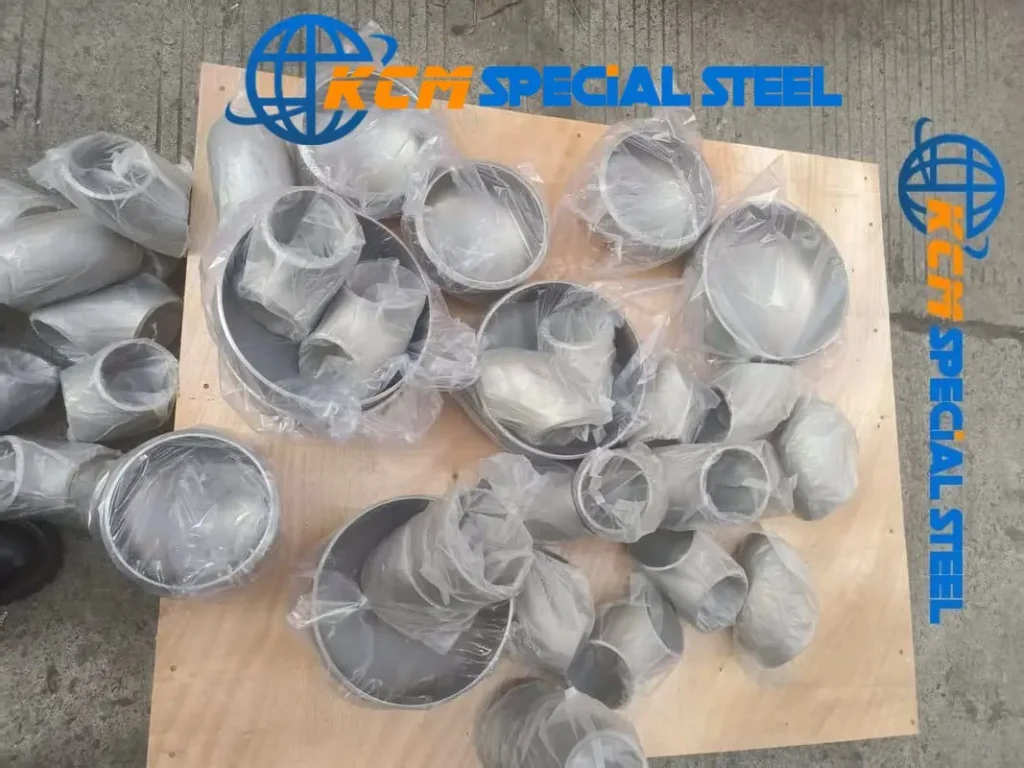
Q11: What types of EN 1.4462 pipe fittings does KCMSS supply?
We manufacture and stock a complete range of 1.4462 duplex stainless steel pipe fittings to ASME B16.9 and B16.11.
Elbows come in 45° 90° and 180° configurations. Long‑radius elbows are standard, while short‑radius options suit compact layouts. Tees are available as equal or reducing designs for branch connections. Reducers include concentric and eccentric types, the latter critical for horizontal runs where drainage matters. Caps seal pipe ends permanently, and crosses enable four‑way junctions. Stub ends are produced in short and long patterns for lap‑joint flange assemblies.
Q12: Are the fittings fully solution‑annealed?
Every 1.4462 duplex stainless steel pipe fitting from KCM SPECIAL STEEL undergoes solution annealing at 1020‑1100 °C followed by water quenching. This restores the correct 50/50 phase balance. We verify this through ferrite content measurements per ASTM E562. Non‑annealed fittings risk embrittlement and reduced corrosion resistance.
Q13: Can I order custom‑sized fittings?
Absolutely. KCMSS accepts orders for non‑standard angles, unusual center‑to‑face dimensions, and special wall thicknesses. Our forging shop can produce one‑off 1.4462 duplex stainless steel pipe fittings for unique project requirements. Lead times for custom items typically range from four to eight weeks.
Q14: What flange types are produced in EN 1.4462?
KCM SPECIAL STEEL manufactures 1.4462 duplex stainless steel flanges in all standard configurations to ASME B16.5 and B16.47.
Slip‑on flanges provide an economical solution for low to moderate pressures. They are easy to install and require only fillet welds. Weld neck flanges are preferred for high‑pressure, high‑temperature, or cyclic service. The tapered hub distributes stress evenly into the pipe. Blind flanges close off piping runs and must resist full end‑thrust loading.
Threaded flanges suit small‑bore utility lines where welding is impractical. Socket weld flanges create a crevice‑free bore for sizes up to 4 inches. Lap joint flanges rotate freely around stub ends, simplifying bolt‑hole alignment during assembly.
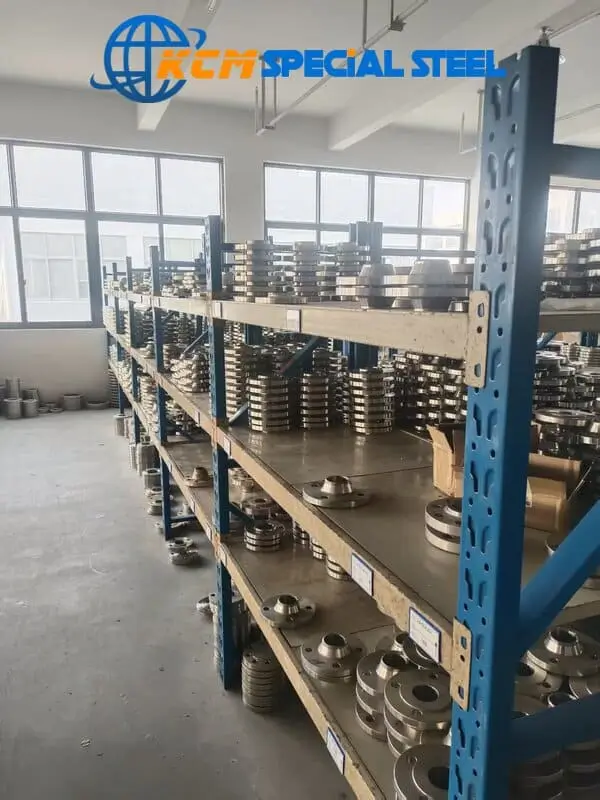
Q15: What pressure classes of 1.4462 duplex steel flanges are available?
KCMSS stocks 1.4462 duplex stainless steel flanges in Classes 150, 300, 600, 900, 1500, and 2500. The high yield strength of the duplex material allows thinner flange dimensions compared to carbon steel at equivalent ratings. However, dimensional conformance to ASME standards is always maintained.
Q16: How do I prevent galling on flange faces?
Duplex stainless steel can gall under high contact pressure. We recommend using a molybdenum disulfide anti‑seize compound on serrated flange faces during assembly. For ring‑type joint flanges, KCMSS supplies soft iron or silver‑plated ring gaskets to prevent damage to the groove.
Q17: Which valve types are manufactured in EN 1.4462?
Our valve division produces 1.4462 duplex stainless steel valves across all major configurations.
Ball valves offer quarter‑turn operation with bubble‑tight shutoff. Both floating‑ball and trunnion‑mounted designs are available. Check valves prevent reverse flow; we supply swing‑check, dual‑plate, and piston‑lift types. Butterfly valves provide a compact, lightweight solution ideal for large‑diameter lines and tight spaces. They feature low operating torque and minimal pressure drop.
Gate valves are preferred where minimum flow restriction matters. The wedge rises completely clear of the flow path, allowing pig passage and full‑bore inspection.
Q18: Are the valves suitable for subsea applications?
Yes. KCMSS supplies 1.4462 duplex stainless steel valves qualified to API 6A and API 17D for subsea manifolds and trees. These valves undergo extensive testing, including hyperbaric chamber trials to simulate deep‑water conditions. Density is tightly controlled to match buoyancy module specifications.
Q19: What sealing materials are compatible?
For standard service, PTFE and reinforced PTFE seats work well. In high‑temperature applications, we recommend PEEK or metal‑seated designs. The 1.4462 duplex stainless steel valve body and trim are inherently compatible with sour gas per NACE MR0175.
Q20: What plate dimensions does KCMSS stock?
We maintain inventory of 1.4462 duplex stainless steel plates in thicknesses from 1.5 mm to 100 mm. Standard widths are 1500 mm and 2000 mm, with lengths up to 6000 mm. Cut‑to‑size services are available for smaller orders. Plates are supplied with mill test certificates showing full chemical and mechanical results.
Q21: How should plates be stored and handled?
Store 1.4462 duplex stainless steel plates indoors or under cover. Avoid contact with carbon steel to prevent iron contamination. Use wooden or padded supports. KCMSS ships all plates with protective interleaving or peel‑off film. Contamination can initiate pitting, so clean handling practices are essential.
Q22: What bar shapes and sizes are available?
KCM SPECIAL STEEL supplies 1.4462 duplex stainless steel bars in rounds from 6 mm to 500 mm diameter. Square and hexagonal bars are stocked from 10 mm to 100 mm across flats. Flat bars range from 10×3 mm to 200×30 mm. All bars are solution‑annealed and descaled.
Q23: Can I order forged bar for critical rotating equipment?
Yes. For pump shafts and propeller shafts, we recommend forged 1.4462 duplex stainless steel bar with additional ultrasonic testing to ASTM A388. This ensures freedom from internal defects. KCMSS also performs mechanical testing on prolongations from each forging for critical applications.
Q24: What structural sections are available in EN 1.4462?
We extrude and roll angles, channels, I‑beams, and tees in various sizes. These structural sections find use in chemical plant walkways, coastal balustrades, and architectural frameworks. The high strength‑to‑density ratio allows slender, elegant structures.
Q25: Can KCMSS produce custom profiles?
Yes, custom 1.4462 duplex stainless steel profiles are a KCMSS specialty. We design and machine near‑net‑shape profiles that reduce downstream fabrication. Typical custom profiles include heat exchanger fins, marine railing extrusions, and complex architectural moldings. Send us your drawing, and our technical team will evaluate feasibility.
Q26: Where is EN 1.4462 most commonly used?
Table 5: Principal Application Domains
| Sector | Critical Components Using EN 1.4462 |
|---|---|
| Oil & Gas Upstream | Subsea trees, manifolds, flowlines, chemical injection |
| Oil & Gas Downstream | Heat exchangers, reactor internals, sour gas piping |
| Chemical Processing | Sulfuric acid coolers, caustic evaporators, pressure vessels |
| Desalination | Brine piping, RO pressure shells, energy recovery devices |
| Marine Engineering | Propeller shafts, rudder stocks, seawater cooling, deck fittings |
| Pulp & Paper | Digester vessels, bleach plant equipment, liquor tanks |
| Power Generation | FGD scrubbers, condenser tubes, cooling water systems |
| Civil Infrastructure | Bridge bearings, stainless rebar, coastal handrails |
| Food Processing | Hygienic piping, tanks for chloride‑based CIP systems |
KCM SPECIAL STEEL has supplied 1.4462 duplex stainless steel products to projects in every sector listed above. Our experience spans six continents and over thirty countries.
Q27: What testing does KCMSS perform on EN 1.4462 products?
Every product undergoes tensile testing, hardness measurement, and dimensional inspection. For 1.4462 duplex stainless steel flanges and 1.4462 duplex stainless steel valves, we additionally perform pressure testing. Impact testing to -46 °C is standard for all products above 16 mm thickness. Intergranular corrosion testing per ASTM A262 Practice E is available upon request.
Q28: What certifications does KCMSS hold?
KCM SPECIAL STEEL maintains ISO 9001, ISO 14001, and ISO 45001 certifications. Our products are supplied with EN 10204 Type 3.1 or 3.2 certificates. We are approved by major end‑users including national oil companies, EPC contractors, and classification societies.
Q29: How quickly can KCMSS deliver EN 1.4462 products?
Standard 1.4462 duplex stainless steel pipe, 1.4462 duplex stainless steel pipe fittings, and 1.4462 duplex stainless steel flanges are available from stock for immediate dispatch. Non‑stock items typically require four to ten weeks, depending on complexity. Urgent orders can be accelerated; please contact our sales team directly.
Q30: Does KCMSS offer technical support during design?
Yes, we provide full technical support at no charge. Our metallurgists can advise on grade selection, welding procedures, and corrosion assessments. For complex projects, we offer on‑site visits and participation in design reviews. This service has helped many clients optimize their use of EN 1.4462 duplex stainless steel products.
For further information or to request a quotation, please contact KCM SPECIAL STEEL (KCMSS). Our team is ready to assist with your next project involving 1.4462 duplex stainless steel products.