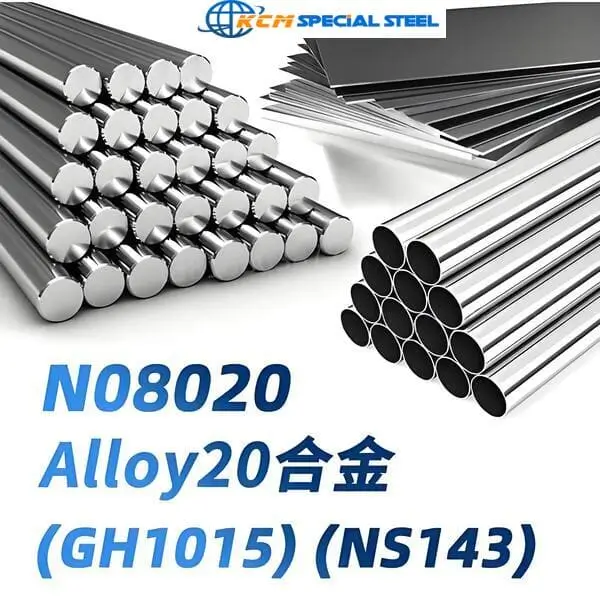
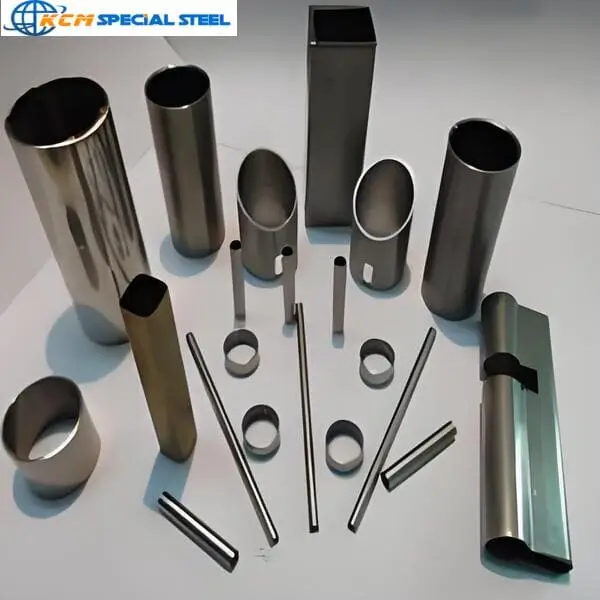
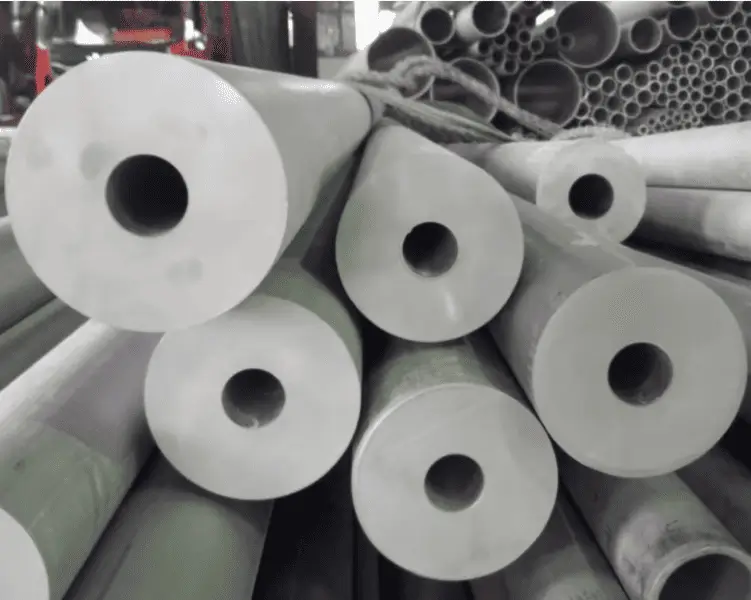
Alloy 20 pipe (UNS N08020) is a nickel-iron-chromium austenitic alloy tubing, stabilized with columbium and enriched with copper and molybdenum. Governed by ASTM B729/B464, it offers superior corrosion resistance in sulfuric acid and chloride environments, effectively preventing stress corrosion cracking.
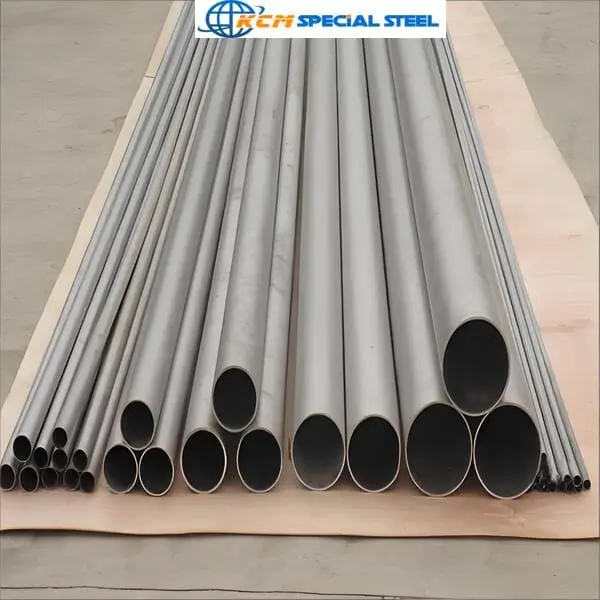
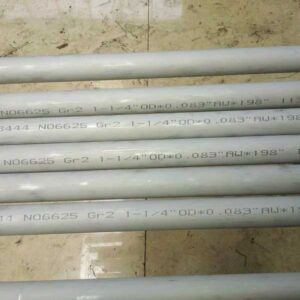
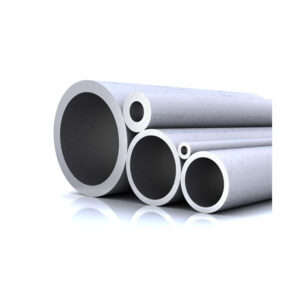
UNS N08020 pipe is a seamless or welded tubular product made from a nickel-iron-chromium austenitic alloy stabilized with columbium (ASTM B729/B464). It provides superior corrosion resistance in sulfuric acid and chloride environments, effectively preventing stress corrosion cracking.
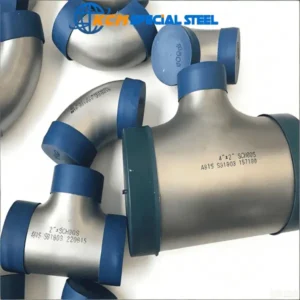
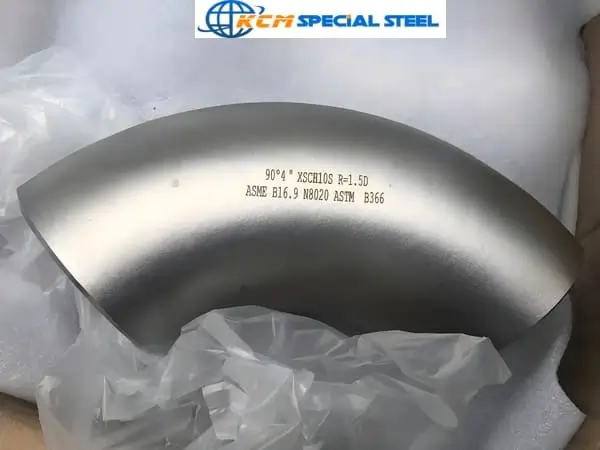
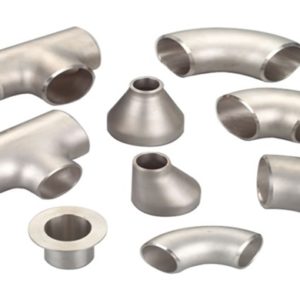
Alloy 20 pipe fittings (UNS N08020) are components manufactured to ASTM B366/ASME SB366 standards. These nickel-iron-chromium alloy fittings offer superior corrosion resistance in sulfuric acid and chloride environments, effectively preventing stress corrosion cracking.
NS143 pipe is a tubular product made from a nickel-iron-chromium austenitic alloy, stabilized with niobium and enriched with copper and molybdenum (GB/T 15007). It offers superior corrosion resistance in sulfuric acid and chloride environments, effectively preventing stress corrosion cracking.
Alloy 20 tube (UNS N08020) is a nickel-iron-chromium austenitic alloy tubing, stabilized with columbium and enriched with copper and molybdenum. Governed by standards like ASTM B729, it offers superior corrosion resistance in sulfuric acid and chloride environments, effectively preventing stress corrosion cracking.
EN 2.4660 pipe fittings are components manufactured from a nickel-iron-chromium-molybdenum-copper alloy, standardized under EN 10095 and SEW 490. These austenitic fittings offer superior corrosion resistance in sulfuric acid and chloride environments, effectively preventing stress corrosion cracking.
EN 2.4660 pipe is a high-performance nickel-chromium-iron alloy tube standardized under EN 10095. It offers superior corrosion resistance and high strength at temperatures up to 700°C, making it ideal for aerospace and chemical processing applications requiring durability in extreme environments.
In the demanding world of industrial engineering, where corrosive substances and extreme temperatures are commonplace, selecting the right material is not merely a matter of efficiency—it is a critical imperative for safety and longevity.
Among the vast array of metallurgical solutions available today, Alloy 20 stands out as a premier choice for resisting sulfuric acid corrosion and other aggressive environments. As a specialized nickel-iron-chromium-molybdenum alloy, it bridges the gap between standard stainless steels and more expensive nickel-based superalloys.
At KCM SPECIAL STEEL (KCMSS), we understand the nuances of this remarkable material, providing high-quality piping solutions that meet the rigorous demands of the chemical processing, petrochemical, and marine industries. This comprehensive guide explores the technical specifications, physical properties, and diverse applications of Alloy 20 pipes, tubes, and fittings, ensuring you have the knowledge to make informed procurement decisions. Introduction to Alloy 20 Pipe and Fittings UNS N08020 NS143 EN 2.4660/1.4460: The Corrosion Resistant Champion
Alloy 20 Pipe and Fittings UNS N08020 NS143 EN2.4660
Alloy 20 Pipe, often referred to by its UNS number UNS N08020, was originally developed in the 1950s with a specific purpose: to combat the devastating effects of sulfuric acid. Unlike standard austenitic stainless steels, which can suffer from pitting and stress corrosion cracking in acidic environments, Alloy 20 was engineered with a unique chemical balance to withstand such conditions. Over the decades, its application has broadened significantly due to its excellent resistance to general corrosion, pitting, and crevice corrosion in environments containing chlorides, sulfates, and phosphates.
The material is known by various designations across international standards, including NS143 in Chinese specifications and EN 2.4660 (often associated with W.Nr. 2.4660) in European contexts. It is an austenitic alloy, meaning it possesses a face-centered cubic crystal structure that provides good toughness and ductility. What sets it apart is the strategic addition of copper and molybdenum. The copper content is specifically beneficial for resisting sulfuric acid, while molybdenum enhances resistance to chloride-induced pitting and crevice corrosion. Furthermore, the addition of Columbium (Niobium) acts as a stabilizer, preventing the precipitation of chromium carbides during welding, thereby safeguarding the material against intergranular corrosion.
For industries dealing with aggressive media, the choice of piping is paramount. Whether you require an Alloy 20 seamless pipe for high-pressure applications or an Alloy 20 welded pipe for cost-effective large-diameter transport, understanding the material’s fundamental composition is the first step toward operational excellence. KCM SPECIAL STEEL (KCMSS) specializes in manufacturing these components to exact specifications, ensuring reliability from the raw material stage to the final product.
Alloy 20 Pipe and Fittings UNS N08020 NS143 EN 2.4660 Chemical Composition: The Science Behind the Strength
Alloy 20 Pipe and Fittings UNS N08020 NS143 EN2.4660
The exceptional performance of Alloy 20 is directly attributable to its precise chemical makeup. It is not merely “stainless steel”; it is a sophisticated blend designed to form a robust passive film on the surface. This film protects the metal from oxidizing acids and localized attacks.
Below is the detailed chemical composition of Alloy 20 (UNS N08020 / NS143 / EN 2.4660), adhering to ASTM standards:
| Element | Symbol | Percentage (%) | Function |
|---|
| Nickel | Ni | 32.0 – 38.0 | Provides austenitic structure; resists reducing acids and stress corrosion cracking. |
| Chromium | Cr | 19.0 – 21.0 | Forms the protective oxide layer; resists oxidizing agents and high temperatures. |
| Molybdenum | Mo | 2.0 – 3.0 | Enhances resistance to pitting and crevice corrosion, especially in chloride environments. |
| Copper | Cu | 3.0 – 4.0 | Crucial for resistance to sulfuric acid; improves resistance to reducing environments. |
| Columbium (Nb) | Cb/Nb | 8xC – 1.00 | Stabilizes the structure against sensitization during welding; prevents intergranular corrosion. |
| Carbon | C | ≤ 0.07 | Kept low to minimize carbide precipitation. |
| Iron | Fe | Balance | Acts as the base matrix for the alloy. |
This specific formulation ensures that an UNS N08020 pipe maintains its integrity even when exposed to boiling sulfuric acid. The synergy between Nickel, Chromium, Molybdenum, and Copper creates a material that is far superior to Type 316 stainless steel in most chemical environments. For instance, the copper content allows the Alloy 20 tube to handle dilute sulfuric acid much better than molybdenum-bearing stainless steels alone. Meanwhile, the high nickel content virtually eliminates the risk of chloride stress corrosion cracking (SCC), a common failure mode for standard austenitic steels in coastal or chemical plant settings.
Alloy 20 Pipe and Fittings UNS N08020 NS143 EN 2.4660 Mechanical and Physical Properties
When designing a piping system, engineers must consider not only corrosion resistance but also the mechanical strength and physical behavior of the material under operating conditions. Alloy 20 offers a compelling combination of high strength and excellent ductility.
Alloy 20 Pipe and Fittings UNS N08020 NS143 EN2.4460
Alloy 20 Pipe and Fittings UNS N08020 NS143 EN 2.4660 Mechanical Properties (Annealed Condition):
| Property | Metric Value | Imperial Value |
|---|
| Tensile Strength | ≥ 550 MPa | ≥ 80 ksi |
| Yield Strength (0.2% Offset) | ≥ 240 MPa | ≥ 35 ksi |
| Elongation (in 50mm) | ≥ 30% | ≥ 30% |
| Hardness (Brinell) | ≤ 217 HB | ≤ 217 HB |
These figures indicate that an Alloy 20 flange or fitting can withstand significant pressure and deformation before failing. The yield strength of Alloy 20 is notably higher than that of Type 304 or 316 stainless steel, allowing for potentially thinner wall thicknesses in certain designs, although corrosion allowance usually dictates the final dimensions.
Alloy 20 Pipe and Fittings UNS N08020 NS143 EN2.4460
Alloy 20 Pipe and Fittings UNS N08020 NS143 EN 2.4660 Physical Properties:
| Property | Value |
|---|
| Density | 8.14 g/cm³ (0.294 lb/in³) |
| Melting Point | 1370°C – 1400°C (2500°F – 2550°F) |
| Specific Heat | 0.12 Btu/lb·°F (at 70°F) |
| Thermal Conductivity | 7.2 Btu·ft/ft²·h·°F (at 70°F) |
| Modulus of Elasticity | 29 x 10⁶ psi (200 GPa) |
The density of Alloy 20 is slightly higher than standard stainless steel, a factor to consider for weight-sensitive structures. Its thermal conductivity is relatively low, similar to other austenitic alloys, which is advantageous for heat exchanger applications using Alloy 20 seamless tubes. The melting range confirms its suitability for high-temperature service, although it is generally recommended for use up to roughly 550°C to avoid embrittlement issues associated with long-term exposure in the 600°C range.
Alloy 20 Pipe and Fittings UNS N08020 NS143 EN 2.4660 Product Portfolio: Pipes, Tubes, and Fittings
At KCM SPECIAL STEEL (KCMSS), we offer a comprehensive range of products manufactured from Alloy 20. Our inventory caters to diverse industrial needs, from small-bore instrumentation tubing to large-diameter process piping.
Alloy 20 Pipe and Fittings UNS N08020 NS143 EN2.4660
1. Alloy 20 Pipe and Tube Solutions
The distinction between a pipe and a tube is often defined by how they are measured and their application. Pipes are generally used for transporting fluids and gases and are measured by nominal pipe size (NPS) and schedule (wall thickness). Tubes are often used for structural applications or heat exchange and are measured by outside diameter (OD) and wall thickness.
- Alloy 20 Seamless Pipe & Tube: Produced by piercing a solid billet, seamless products have no welded seam. This makes them ideal for high-pressure and high-temperature applications where uniformity is critical. An Alloy 20 seamless pipe is less susceptible to leakage and has higher structural integrity. We supply UNS N08020 seamless pipes in various schedules (SCH 10S to SCH 160, XXS).
- Alloy 20 Welded Pipe: Manufactured by rolling a plate or coil and welding the edges (using ERW or EFW methods), welded pipes are a cost-effective solution for lower pressure applications or larger diameters where seamless availability is limited. Our UNS N08020 welded pipes undergo rigorous non-destructive testing to ensure the weld zone matches the corrosion resistance of the parent metal.
- Heat Exchanger Tubes: The Alloy 20 tube is extensively used in shell-and-tube heat exchangers. Its resistance to cooling water, seawater, and process chemicals makes it a durable choice for condensers and evaporators.
2. Alloy 20 Pipe Fittings
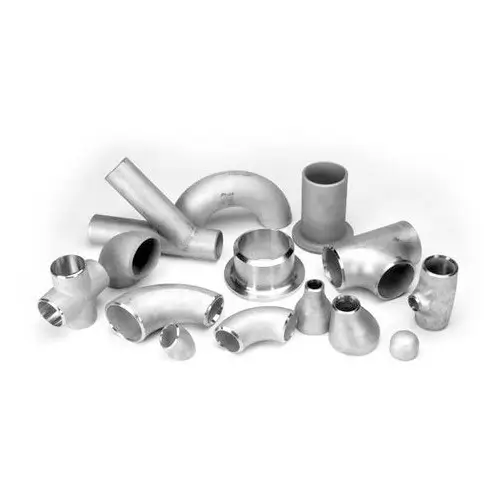
A piping system is only as strong as its connections. We manufacture a full suite of Alloy 20 pipe fittings designed to connect, control, and change the direction of flow within a system. These include:
- Alloy 20 Elbow: Available in 45° and 90° configurations, elbows allow for smooth directional changes in the pipeline.
- Alloy 20 Tee: Used to split or combine fluid flow, tees come in equal (straight) and reducing varieties.
- Alloy 20 Reducer: Essential for connecting pipes of different diameters, reducers manage flow velocity and pressure changes.
- Alloy 20 Cap: Used to seal the end of a pipe, protecting the system from contaminants.
- Alloy 20 Stub End: Typically used with lap joint flanges to allow for easy disassembly and rotation around the bolt circle.
- Alloy 20 Cross: A four-way fitting used where flow needs to be divided in multiple directions.

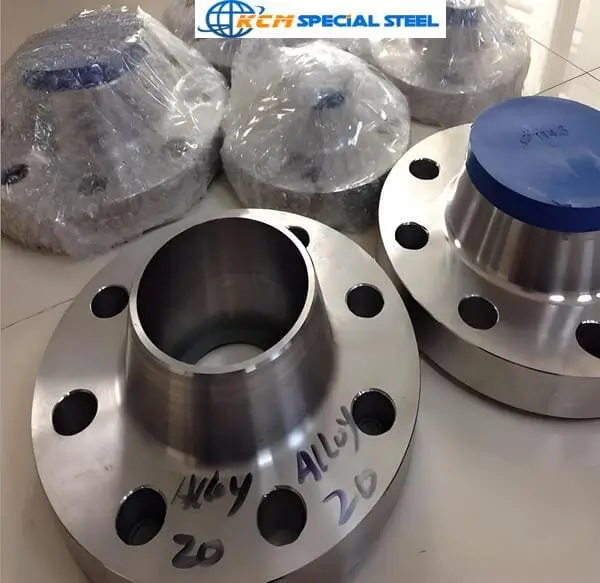
Our Alloy 20 flange offerings include Weld Neck, Slip-On, Blind, and Socket Weld types, all machined to ASME B16.5 or B16.47 standards. Whether you need an UNS N08020 flange for a high-pressure reactor or a simple NS143 pipe fitting for a drainage line, KCMSS ensures dimensional accuracy and material purity.
Alloy 20 Pipe and Fittings UNS N08020 NS143 EN 1.4460 Comparative Analysis: Why Choose Alloy 20?
Alloy 20 Pipe and Fittings UNS N08020 NS143 EN2.4460
To truly appreciate the value of Alloy 20, one must compare it to other common materials. While Type 316L stainless steel is the industry workhorse, it falls short in severe corrosive environments. Conversely, high-performance nickel alloys like Hastelloy C-276 offer supreme resistance but at a significantly higher cost. Alloy 20 occupies the “sweet spot” between performance and economy.
| Feature | 316L Stainless Steel | Alloy 20 (UNS N08020) | Hastelloy C-276 |
|---|
| Primary Use | General purpose, mild acids | Sulfuric acid, Chlorides | Extreme corrosion, mixed acids |
| Pitting Resistance (PREN) | ~25 | > 35 | > 60 |
| Stress Corrosion Cracking | Susceptible | Highly Resistant | Immune |
| Sulfuric Acid Resistance | Poor (Low conc./temp) | Excellent (Wide range) | Superior |
| Cost Factor | Low | Medium | High |
As illustrated, the Alloy 20 pipe offers a massive upgrade in performance over 316L, particularly regarding Stress Corrosion Cracking (SCC). In environments rich in chlorides—such as coastal desalination plants or chemical reactors—316L can fail catastrophically due to SCC. However, the high nickel content in the UNS N08020 pipe renders it virtually immune to this failure mode. Furthermore, compared to super-alloys, the Alloy 20 tube provides sufficient protection for many processes at a fraction of the capital expenditure.
Another key advantage is fabricability. Despite its strength, Alloy 20 is readily weldable. The addition of Columbium (Cb) ensures that the Alloy 20 flange or pipe does not become sensitized (prone to corrosion) in the heat-affected zone after welding. This means that post-weld heat treatment is generally not required, simplifying construction and maintenance.
Alloy 20 Pipe and Fittings UNS N08020 NS143 EN 2.4660 Applications Across Industries
Alloy 20 Pipe and Fittings UNS N08020 NS143 EN2.4660
The versatility of Alloy 20 allows it to serve in a multitude of sectors. KCM SPECIAL STEEL (KCMSS) proudly supplies materials that keep these critical industries running safely.
1. Chemical Processing Industry (CPI)
This is the primary domain of Alloy 20. It is the material of choice for handling sulfuric acid, phosphoric acid, and nitric acid. From reaction vessels to piping networks, the Alloy 20 seamless pipe ensures that aggressive chemicals are contained without risk of leakage. It is also used in the production of explosives, plastics, and synthetic fibers.
2. Petrochemical and Refining
In oil refineries, equipment is often exposed to sour gas (H₂S) and acidic byproducts. The UNS N08020 pipe fittings are resistant to sulfide stress cracking, making them reliable for alkylation units and acid recovery systems.
3. Marine and Offshore
Seawater is highly corrosive due to its salt content. Standard stainless steels pit rapidly in seawater. However, the molybdenum and copper content in the NS143 pipe provide excellent resistance to seawater corrosion. Consequently, Alloy 20 is used in seawater cooling systems, heat exchangers on offshore platforms, and desalination plant piping.
4. Food and Pharmaceutical
Hygiene and purity are paramount in these sectors. Alloy 20 does not contaminate products with metallic ions, making it suitable for processing equipment involving organic acids (like citric or acetic acid) and hot brine solutions. An Alloy 20 elbow or valve in a food processing line ensures product integrity and long service life.
5. Pollution Control (FGD)
Flue Gas Desulfurization (FGD) systems in power plants scrub sulfur dioxide from exhaust gases. This process creates a highly acidic, wet environment. Alloy 20 welded pipes and ducts are essential here to withstand the acidic mist and slurries generated during the cleaning process.
Alloy 20 Pipe and Fittings UNS N08020 NS143 EN 2.4660 Manufacturing Quality and Standards
At KCM SPECIAL STEEL (KCMSS), quality is not just a promise; it is a verified metric. Our Alloy 20 products are manufactured in strict accordance with international standards such as ASTM B463 (for plates/sheets), ASTM B729 (for seamless pipes/tubes), and ASTM B464 (for welded pipes). Alloy 20 Pipe and Fittings UNS N08020 NS143 EN2.4660
We employ advanced manufacturing techniques to ensure the highest quality:
- Precision Casting & Forging: For our Alloy 20 flange and fittings, we use precision forging to align the grain structure with the shape of the part, enhancing strength and fatigue resistance.

- Cold Drawing: For Alloy 20 seamless tubes, cold drawing improves surface finish and dimensional accuracy, which is vital for heat transfer efficiency.
- Heat Treatment: All our products undergo solution annealing (heating to approx. 900-1150°C followed by rapid cooling). This dissolves any carbides and restores the alloy’s corrosion-resistant properties.
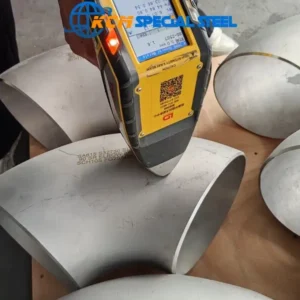
- Testing & Inspection: Every batch of UNS N08020 pipe undergoes hydrostatic testing, eddy current testing, and radiography. We also perform Positive Material Identification (PMI) to guarantee the chemical composition matches the certified grade.
We understand that lead times and logistics are crucial. Therefore, we maintain a substantial stock of NS143 seamless pipes, Alloy 20 elbows, and other fittings to meet urgent project requirements. Our global supply chain ensures that whether you are building a plant in Asia, Europe, or the Americas, KCMSS can deliver.
Alloy20 Pipe and Fittings UNS N08020 NS143 EN 2.4660 Conclusion
Alloy 20 Pipe and Fittings UNS N08020 NS143 EN2.4660
In summary, Alloy 20 (UNS N08020 / NS143 / EN 2.4660) represents a pinnacle of metallurgical engineering for corrosion-resistant applications. Its unique ability to resist sulfuric acid, combined with immunity to chloride stress corrosion cracking, makes it an indispensable asset for modern industry. Whether you are specifying an Alloy 20 seamless pipe for a high-pressure reactor or sourcing Alloy 20 pipe fittings for a complex network of coolant lines, the material offers a lifecycle cost advantage that is hard to match.
Choosing the right supplier is equally important. KCM SPECIAL STEEL (KCMSS) stands ready to support your projects with premium quality Alloy 20 products, expert technical advice, and reliable service. By choosing our Alloy 20 tubes and fittings, you are investing in safety, durability, and operational peace of mind. Don’t let corrosion compromise your infrastructure; trust in the proven performance of Alloy 20.