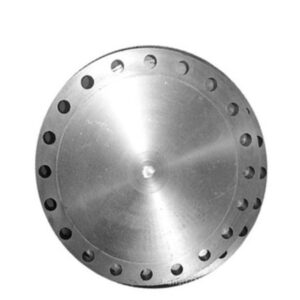
Description
Stainless Steel WN Flange Suppliers and Manufacturers brief introduction.
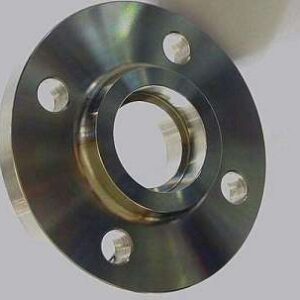
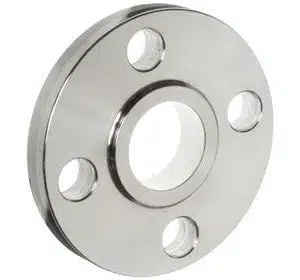
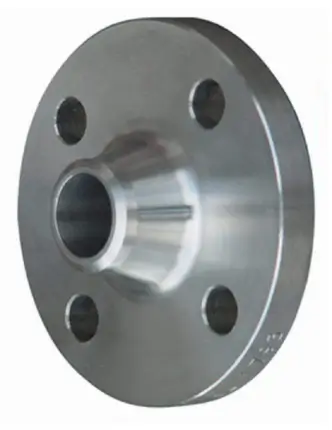
Stainless Steel WN Flange refers to a welding neck flange made of corrosion-resistant steel alloys (e.g., 304 or 316 grades) designed for high-pressure piping systems. Key features include:
Structure: A tapered hub and extended neck welded to pipes, ensuring stress distribution and leak-proof connections.
Standards: Complies with ASTM A182 or ASME B16.5 for dimensional and material specifications.
Applications: Used in oil/gas, chemical plants, and water treatment systems to join pipes, valves, or equipment.
This flange type is preferred for its durability under extreme temperatures and pressures
STAINLESS STEEL WN FLANGE Belong to the American standard flange standard system. Is the American standard flange (also known as ANSI flange) one of the manifestations of equipment or pipes commonly used in the flange. The following is the ANSI WN high neck flange, the relevant pressure, the various parts of the size and icon,

STAINLESS STEEL WN FLANGE SUPPLIERS,MANUFACTURERS, STOCKHOLDER IN CHINA, CONTACT US FOR AMAZING PRICE AND HIGH QUALITY STAINLESS STEEL WN FLANGES
KCM SPECIAL STEEL IS OFFERING STAINLES STEEL WN FLANGE EXCUTIVE STANDARD:ANSI,EN,BS,JIS,UNI,GOST,SABS,DIN,GB,ETC
What is Stainless Steel WN Flange?
Stainless steel WN (Welding Neck) flange is a pressure-containing pipe fitting. It features a tapered hub for butt welding to pipe, a raised face (or other finish) for sealing against a mating flange, and bolt holes for assembly. It provides high-integrity connections in piping systems. Based on ASME B16.5/ANSI B16.5 and Material Standard ASTM A182.
What is Stainless Steel Weld Neck Flange?
Stainless steel WN (Welding Neck) flange is a pressure-containing pipe fitting. It features a tapered hub for butt welding to pipe, a raised face (or other finish) for sealing against a mating flange, and bolt holes for assembly. It provides high-integrity connections in piping systems. Based on ASME B16.5 & ASTM A182

What are the Standards for Stainless Steel WN (Weld Neck) Flange?
The standards for stainless steel Weld Neck (WN) flanges primarily govern their dimensions, pressure-temperature ratings, materials, marking, and testing. No single standard covers everything; they work together. Here’s a breakdown of the key standards involved:
Primary Dimensional & Pressure-Temperature Rating Standards (US/International – ASME B16 Series):
- ASME B16.5 – Pipe Flanges and Flanged Fittings NPS 1/2 through NPS 24 Metric/Inch Standard:
- This is the most common standard for WN flanges in sizes NPS 1/2″ to NPS 24″.
- Defines: Flange dimensions (OD, thickness, bolt circle, bore, hub dimensions, facing), facing types (RF, FF, RTJ, etc.), pressure classes (150, 300, 400, 600, 900, 1500, 2500), and pressure-temperature ratings for each class and material group.
- Includes tables showing the maximum allowable pressures (in psi or bar) at various temperatures for different materials (organized by ASTM material group).
- ASME B16.47 – Large Diameter Steel Flanges NPS 26 through NPS 60 Metric/Inch Standard:
- Covers WN flanges larger than NPS 24″ up to NPS 60″.
- Defines dimensions, facings, pressure classes (75, 100, 150, 300, 400, 600, 900), pressure-temperature ratings.
- Crucially, it incorporates two series:
- Series A (MSS SP-44): Typically heavier and has higher bolt loads. Common in petroleum pipelines and similar industries.
- Series B (API 605): Historically lighter weight. Still used but Series A is generally preferred for new designs.
- ASME B16.25 – Buttwelding Ends:
- Specifies the details of the weld end preparation (bevel angle, root face, etc.) for WN flanges and other buttwelding components. This ensures compatibility and proper welding procedures.
- ASME B16.5 – Pipe Flanges and Flanged Fittings NPS 1/2 through NPS 24 Metric/Inch Standard:
Primary Material Specification (ASTM):
- ASTM A182 / A182M – Standard Specification for Forged or Rolled Alloy and Stainless Steel Pipe Flanges, Forged Fittings, and Valves and Parts for High-Temperature Service:
- This is the fundamental material specification for forged stainless steel flanges (including WN).
- Defines: Chemical composition requirements, mechanical properties (tensile strength, yield strength, hardness, elongation), heat treatment requirements (solution annealing for austenitic SS), testing requirements (tensile tests, hardness tests, hydrostatic tests for fittings, PMI), and marking requirements.
- Common Stainless Steel Grades covered under A182:
- Austenitic: F304, F304L, F304H, F316, F316L, F316H, F317L, F321, F321H, F347, F347H, F348, F348H
- Duplex/Super Duplex: F51 (UNS S31803), F53 (UNS S32750), F55 (UNS S32760)
- Other: F44 (UNS S31254 – 6% Mo Super Austenitic), F63 (UNS S32550 – Super Duplex)
- Requires the manufacturer’s name or trademark, material grade, heat number, and specification (A182) to be marked on the flange.
- ASTM A182 / A182M – Standard Specification for Forged or Rolled Alloy and Stainless Steel Pipe Flanges, Forged Fittings, and Valves and Parts for High-Temperature Service:
Supplementary Standards & Considerations:
- MSS SP-44 – Steel Pipeline Flanges: Now incorporated as “Series A” in ASME B16.47 for large flanges.
- API 605 – Large Diameter Carbon Steel Flanges: Now incorporated as “Series B” in ASME B16.47 for large flanges.
- NACE MR0175 / ISO 15156 – Petroleum and natural gas industries — Materials for use in H2S-containing environments in oil and gas production: Mandatory for flanges used in sour service (environments containing hydrogen sulfide). Specifies material requirements and hardness limits to prevent sulfide stress cracking (SSC).
- ASME Section VIII Division 1 (Pressure Vessel Code): Governs the design and fabrication of pressure vessels. Flanges used on vessels must comply with B16.5/B16.47 and the requirements of Section VIII Div 1 (e.g., specific marking, potential for impact testing at low temps).
- ASME B31 Series (Piping Codes): E.g., B31.1 (Power Piping), B31.3 (Process Piping). These codes reference B16.5, B16.47, and A182 and govern the application of flanges within piping systems (design, fabrication, inspection, testing).
- Facing Finishes:
- ASME B46.1 – Surface Texture (Surface Roughness): Specifies requirements for flange facings. Ra 125-250 μin (3.2-6.3 μm) is typical for RF faces. RTJ grooves have specific finish requirements defined in B16.5/B16.47.
- Serrated vs. Smooth Finish: Serrations (concentric or spiral phonographic) are common on RF faces to aid gasket sealing.
- Ring Joint Grooves (RTJ): Dimensions are defined in B16.5/B16.47. Specific groove finishes and gasket requirements are covered in standards like API 6A or ASME B16.20.
- International Equivalents:
- EN 1092-1: European standard for PN and Class designated flanges (e.g., PN10, PN16, PN40, Class 150, Class 300).
- ISO 7005-1: Combines elements of ASME B16.5 and EN 1092-1. Largely superseded by EN 1092-1 in Europe.
- JIS B2220: Japanese Industrial Standard for steel pipe flanges.
In Summary – How They Work Together:
- Size & Pressure Class: Determine whether ASME B16.5 (NPS 1/2″ – 24″) or ASME B16.47 (NPS 26″ – 60″) applies, and select the required Pressure Class (e.g., 150, 300, 600).
- Material: Specify the stainless steel grade according to ASTM A182 (e.g., F304L, F316, F51).
- Rating: Use the Pressure Class from step 1 and the Material from step 2 to look up the allowable pressure at the design temperature in the tables within B16.5 or B16.47.
- End Preparation: Ensure the weld end bevel meets ASME B16.25.
- Facing: Specify the facing type (RF, RTJ, etc.) and required finish (per B16.5/B16.47 and B46.1).
- Special Requirements: Apply NACE MR0175 if sour service is needed. Ensure compliance with applicable ASME B31 Piping Code or ASME Section VIII requirements. Specify if MSS SP-44 (Series A) or API 605 (Series B) is required for large flanges.
Always consult the specific project specifications, piping class, or applicable code (B31.1, B31.3, Section VIII) for the final governing requirements. They will dictate which standards and which classes/grades are mandatory.

Stainless Steel Weld Neck Flange Meterial Grade
201, 202, 301, 304, 304L, 310S, 316, 316L,316Ti, 317, 317L, 321, 347,904L Duplex Stainless Steel, S31803/2205, S32750/2507 ,S32760 ,S32304/2304,MONEL400,INCONEL600,INCOLOY800,ALLOY20,ALLOY28,NICKEL ALLOY.WN FLANGES SUPPLIERS & MANUFACTURERS
STAINLESS STEEL WN FLANGE DELIVERY & PACKING:DELIVERY:IN 7-30 DAYS,PACKING:PLASTIC BAG OR WOODEN CASES OR ACC TO CUSTOMER REQUEST.
Stainless Steel WN Flanges features
Stainless steel wn flange is a part of a pipe that is connected to a pipe, connected to a pipe end, with a hole in the flange and a bolt that allows the two flanges to be tightened.
A flanged pipe fitting is a pipe with a flange (flange or plate), which can be made of cast or screwed or welded. Blue, a gasket and a number of bolts and nuts.
Gasket placed between the two flange sealing surface, tighten the nut, the gasket on the surface of the specific pressure to a certain value after the deformation,
and fill the sealing surface rugged Some of the pipe fittings and equipment has its own flanges, but also belong to the flange connection.
Flange connection is an important way to connect the construction of the pipeline.
Flange connection easy to use, able to withstand greater pressure. In industrial piping, the use of flange connections is very extensive.
In the family, the pipe diameter is small, and is low, can not see the flange connection. If in a boiler room or production site, full of flanged pipes and equipment.
Stainless Steel WN Flange Precautions for use:
1, in order to prevent the heating caused by the flange cover between the eye corrosion, welding current should not be too much,
less than about 20% of carbon steel electrode, arc should not be too long, cold between the layers to narrow the weld is appropriate.
2, the electrode should be used to dry, titanium calcium type should be dried at 150 ℃ for 1 hour, low a hydrogen type should be 200-250 ℃ drying 1 hour
(can not be repeated drying, or easy to peel the skin peel), to prevent Welding paste oil and other dirt, so as not to cause the weld to increase the carbon content and affect the quality of welding.
3, Stainless Steel WN Flange pipe welding, by repeated heating precipitation of carbides, reducing corrosion resistance and mechanical properties.
4, chrome stainless steel wn flanges after welding hardening American standard flange larger, prone to crack.
If the same type of chromium stainless steel electrode (G202, G207) welding, must be more than 300 ℃ preheating and 700 ℃
after the slow cooling treatment. If the weldment can not be post-weld heat treatment, you should use stainless steel flange fittings electrode (A107, A207).
5, Stainless Steel WN Flange, in order to improve the corrosion resistance and weldability and the appropriate increase in the amount of stability elements Ti, Nb, Mo,
welding better than chromium stainless steel flange better. When using the same type of chromium stainless steel flange electrode (G302, G307), should be more than
200 ℃ preheat and 800 ℃ after tempering around the tempering treatment. If the weldment can not be heat treated, you should use stainless steel flange fittings (A107, A207).
6, stainless steel flange fittings, butt welding flange has good corrosion resistance and oxidation resistance, widely used in chemical, fertilizer, oil, medical machinery manufacturing.