Description
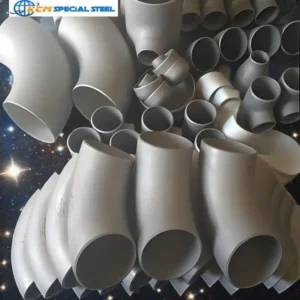
What Are ASTM A815 UNS S31803 Duplex Steel Pipe Fittings / S32205 Butt Weld Fittings / SAF 2205 Pipe Fittings?
ASTM A815 UNS S31803 duplex steel pipe fittings are corrosion-resistant, high-strength components made from a dual-phase (ferritic-austenitic) stainless steel alloy containing ~22% Cr, 5% Ni, and 3% Mo.
ASTM A815 UNS S32205 duplex pipe fittings are high-strength, corrosion-resistant components made from a ferritic-austenitic stainless steel with ~22% Cr, 5% Ni, and 3% Mo.
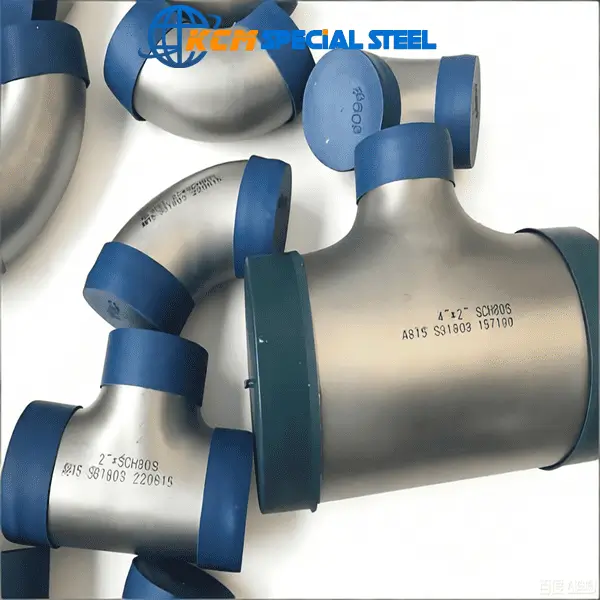
S31803 butt weld pipe fittings are corrosion-resistant, high-strength components made from duplex stainless steel (UNS S31803), featuring a dual-phase microstructure of austenite and ferrite, with ~22% Cr, 5% Ni, and 3% Mo, designed for welded piping systems per ASTM A815.
SAF 2205 pipe fittings are high-strength, corrosion-resistant components made from duplex stainless steel (UNS S32205/S31803), containing ~22% Cr, 5% Ni, and 3% Mo, with a dual-phase ferritic-austenitic microstructure for demanding industrial applications.
S32205 butt weld fittings are high-strength, corrosion-resistant piping components made from duplex stainless steel UNS S32205, featuring a ferritic-austenitic microstructure with ~22% Cr, 5% Ni, and 3% Mo, designed for welded industrial piping systems per ASTM A815.
S31803 duplex stainless steel pipe fittings are corrosion-resistant, high-strength components made from a ferritic-austenitic alloy (UNS S31803) with ~22% Cr, 5% Ni, and 3% Mo, conforming to ASTM A815 for demanding piping applications.
2205 butt weld pipe fittings are high-strength, corrosion-resistant components made from duplex stainless steel UNS S32205 (also known as 2205), featuring a ferritic-austenitic microstructure with ~22% Cr, 5% Ni, and 3% Mo, designed for welded piping systems per ASTM A815.
ASTM A815 UNS S31803 Duplex Steel Pipe Fittings / S32205 Butt Weld Fittings / 2205 Pipe Fittings
In today’s demanding industrial environments—ranging from offshore oil and gas platforms to chemical processing plants and desalination facilities—the need for high-performance, corrosion-resistant piping components has never been greater. Among the most trusted solutions in this domain are ASTM A815 UNS S31803 Duplex Steel Pipe Fittings, often referred to interchangeably as S32205 butt weld fittings or 2205 pipe fittings. These fittings represent a pinnacle of metallurgical engineering, combining the best attributes of austenitic and ferritic stainless steels to deliver exceptional strength, durability, and resistance to localized corrosion.
Manufactured and supplied by KCM SPECIAL STEEL (KCMSS), a globally recognized leader in specialty alloy production, these duplex fittings meet the rigorous standards set forth by ASTM A815 while offering unmatched reliability across extreme operating conditions. This comprehensive article explores the composition, mechanical properties, applications, manufacturing processes, and key advantages of S31803/S32205 duplex stainless steel pipe fittings, with particular emphasis on their role in modern industrial infrastructure.
Understanding Duplex Stainless Steels: The S31803 / S32205 Alloy Family
Duplex stainless steels derive their name from their dual-phase microstructure, which consists of approximately equal parts austenite and ferrite. This unique structure imparts superior mechanical strength—nearly double that of standard austenitic grades like 304 or 316—while maintaining excellent resistance to stress corrosion cracking (SCC), pitting, and crevice corrosion.
The UNS S31803 and UNS S32205 designations refer to two closely related but slightly different compositions within the 22% chromium duplex family. Historically, S31803 was the original specification; however, over time, tighter control of nitrogen content led to the development of S32205, which offers enhanced corrosion resistance and mechanical performance. In practice, many modern fittings labeled as S31803 actually conform to the more stringent S32205 chemistry due to improved manufacturing capabilities.
KCMSS produces fittings that comply with both specifications under the umbrella of ASTM A815, ensuring compatibility with international project requirements and material traceability.
Key Chemical Composition and Mechanical Properties-ASTM A815 UNS S31803 Duplex Steel Pipe Fittings / S32205 Butt Weld Fittings / SAF 2205 Duplex Pipe Fittings?
The outstanding performance of S31803/S32205 duplex pipe fittings stems directly from their precise chemical balance. Below is a comparative table outlining the typical composition ranges per ASTM A815:
| Element | S31803 (Typical %) | S32205 (Typical %) | Role in Performance |
|---|---|---|---|
| Chromium (Cr) | 21.0–23.0 | 22.0–23.0 | Enhances oxidation & pitting resistance |
| Nickel (Ni) | 4.5–6.5 | 4.5–6.5 | Stabilizes austenite phase |
| Molybdenum (Mo) | 2.5–3.5 | 3.0–3.5 | Improves resistance to chlorides |
| Nitrogen (N) | 0.08–0.20 | 0.14–0.20 | Boosts strength & pitting resistance |
| Carbon (C) | ≤0.030 | ≤0.030 | Minimized to prevent sensitization |
| Manganese (Mn) | ≤2.0 | ≤2.0 | Deoxidizer & strength contributor |
| Iron (Fe) | Balance | Balance | Base metal |
Note: While S31803 and S32205 are often used interchangeably, S32205 has a narrower and more controlled nitrogen range, resulting in better PREN (Pitting Resistance Equivalent Number).
The PREN is a critical metric for evaluating corrosion resistance and is calculated as:
PREN = %Cr + 3.3×%Mo + 16×%N
For S32205, PREN typically exceeds 34, significantly higher than 316L stainless steel (PREN ≈ 25), making it ideal for aggressive chloride-rich environments such as seawater systems.
Mechanically, these fittings exhibit remarkable strength:
| Property | Typical Value (S32205) |
|---|---|
| Tensile Strength (MPa) | ≥620 |
| Yield Strength (0.2% offset, MPa) | ≥450 |
| Elongation (%) | ≥25 |
| Hardness (HB) | ≤290 |
| Density (g/cm³) | ~7.8 (±1–2%) |
The density of ASTM A815 UNS S32205 duplex steel is approximately 7.8 g/cm³, with a permissible variation of 1–2% depending on exact alloying and processing conditions.
This combination of high strength and ductility allows for thinner-walled piping designs, reducing overall system weight and cost without compromising safety.
Manufacturing Standards and Quality Assurance by KCMSS-ASTM A815 UNS S31803 Duplex Steel Pipe Fittings / S32205 Butt Weld Pipe Fittings / SAF 2205 Pipe Fittings?
KCM SPECIAL STEEL adheres strictly to ASTM A815/A815M, the standard specification for wrought, ferritic-austenitic (duplex) stainless steel piping fittings of seamless and welded construction for moderate or high-temperature service. Additionally, KCMSS complies with supplementary standards such as:
- ASME B16.9: For dimensional accuracy of butt weld fittings
- EN 10253-4: European standard for duplex steel fittings
- NORSOK M-650: Critical for offshore oil & gas applications
- ISO 9001 & PED 2014/68/EU: Ensuring quality management and pressure equipment compliance
All fittings undergo rigorous testing, including:
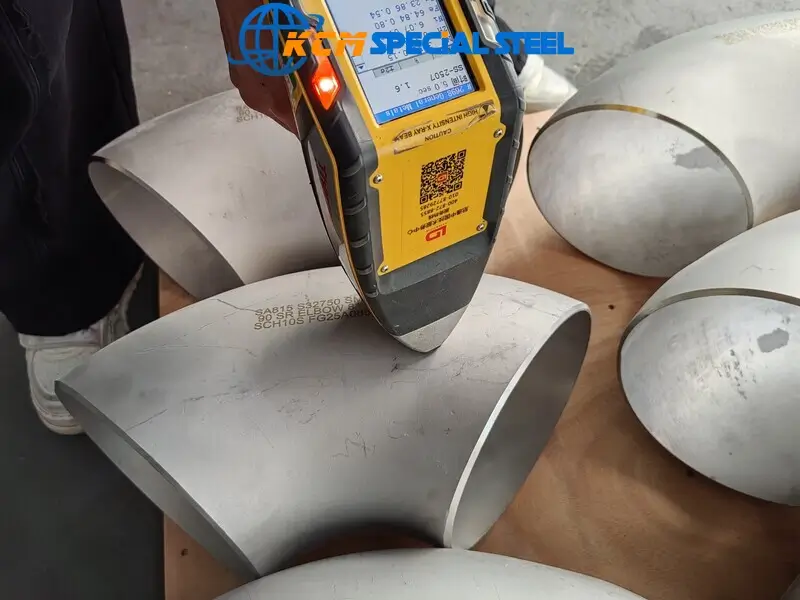
- Positive Material Identification (PMI)
- Hydrostatic and pneumatic pressure tests
- Intergranular corrosion testing (per ASTM A923)
- Ferrite content measurement (target: 30–70% ferrite)
- Non-destructive testing (NDT): RT, UT, PT, or MT as required
KCMSS maintains full traceability from raw material melt to final shipment, providing certified mill test reports (MTRs) compliant with EN 10204 3.1 or 3.2 upon request.
Types of Fittings Available-ASTM A815 UNS S31803 Duplex Steel Pipe Fittings / S32205 Butt Weld Fittings / SAF 2205 Duplex Steel Pipe Fittings?
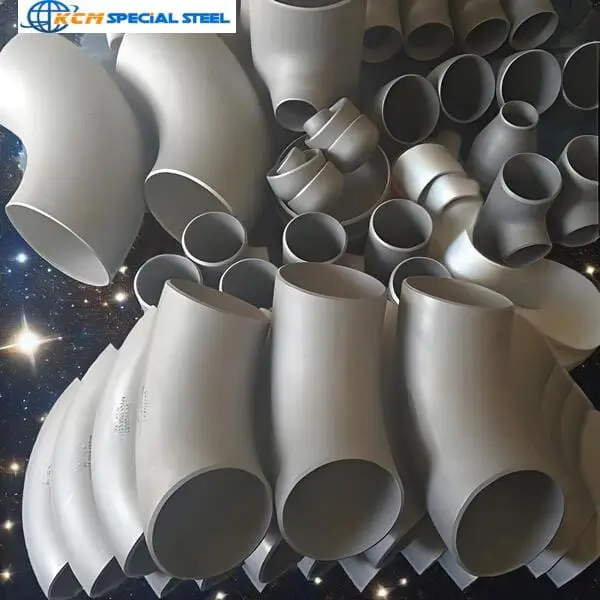
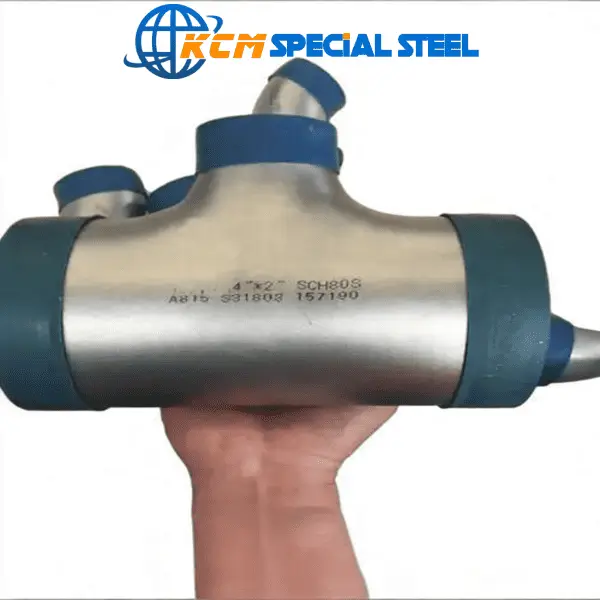
KCMSS supplies a comprehensive range of S31803/S32205 butt weld pipe fittings, suitable for high-integrity piping systems. Common types include:
- Elbows: 90° LR/SR, 45°, 180° return bends
- Tees: Equal and reducing
- Reducers: Concentric and eccentric
- Caps: End closures
- Stub Ends & Lap Joint Flanges
- Custom Fabricated Spools
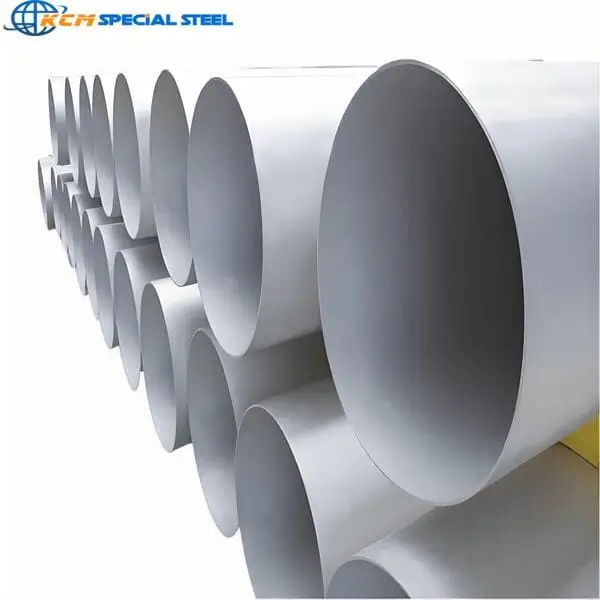
All fittings are available in sizes ranging from ½” NB to 48″ NB, with schedules from Sch 10S to XXS, and can be produced in both seamless (for smaller diameters) and welded (for larger sizes) configurations.
Surface finishes include pickled, blasted, or mechanically polished, depending on application requirements.
Why Choose S31803/S32205/SAF 2205 Over Other Alloys?
When comparing materials for harsh service, engineers often evaluate cost-performance ratios. While super duplex (e.g., S32750) or nickel alloys (e.g., Inconel 625) offer even higher corrosion resistance, they come at a significantly higher cost. 2205 duplex stainless steel strikes an optimal balance:
- Cost-effective: Roughly 30–50% less expensive than 6% Mo super austenitics
- High strength-to-weight ratio: Reduces support structures and installation costs
- Excellent weldability: With proper procedures, minimal post-weld heat treatment needed
- Proven field performance: Decades of successful use in offshore, chemical, and pulp & paper industries
Moreover, unlike carbon steel, 2205 does not require internal linings or cathodic protection in seawater applications, simplifying maintenance and extending service life.
Critical Applications Across Industries-ASTM A815 UNS S31803 Duplex Stainless Steel Pipe Fittings / S32205 Butt Weld Fittings / SAF 2205 Pipe Fittings?
Thanks to their robust properties, S31803/S32205 pipe fittings are deployed in some of the world’s most challenging environments:
1. Oil & Gas (Onshore and Offshore)
- Subsea manifolds and flowlines
- Gas sweetening units (resistant to H₂S)
- Firewater systems on FPSOs and platforms
2. Chemical & Petrochemical Processing
- Reactor vessels and heat exchangers
- Piping for acids, solvents, and caustics
- Chlor-alkali production plants
3. Desalination & Water Treatment
- Reverse osmosis (RO) high-pressure piping
- Brine heaters and evaporators
- Seawater intake and discharge lines
4. Pulp & Paper Industry
- Bleach plants handling chlorine dioxide
- Black liquor recovery systems
5. Marine & Shipbuilding
- Ballast water systems
- Cooling circuits exposed to salt spray
In each case, the resistance to chloride-induced pitting and stress corrosion cracking makes 2205 the material of choice where 316L would fail prematurely.
Installation and Welding Considerations-ASTM A815 UNS S31803 Duplex Steel Pipe Fittings / S32205 Butt Weld Fittings / SAF 2205 Pipe Fittings?
While S31803/S32205 butt weld fittings are highly weldable, proper procedures must be followed to preserve the duplex microstructure:
- Preheat is generally not required, but interpass temperature should be kept below 150°C (302°F) to avoid excessive ferrite formation.
- Use matching filler metals such as ER2209 or E2209 electrodes.
- Post-weld cleaning (pickling or passivation) is recommended to restore corrosion resistance.
- Avoid prolonged exposure to temperatures between 280–980°C, where embrittling phases (sigma, chi) may form.
KCMSS provides detailed welding procedure specifications (WPS) and technical support to ensure flawless field installation.
Environmental and Sustainability Benefits-ASTM A815 UNS S31803 Duplex Steel Pipe Fittings / S32205 Butt Weld Fittings / SAF 2205 Pipe Fittings?
Beyond performance, 2205 duplex stainless steel contributes to sustainability:
- Long service life reduces replacement frequency and waste
- 100% recyclable at end-of-life
- Lower embodied energy compared to nickel-based alloys
- Enables lighter structures, reducing transportation emissions
As industries worldwide pursue ESG (Environmental, Social, Governance) goals, materials like S32205 align perfectly with circular economy principles.
KCM SPECIAL STEEL: Your Trusted Global Partner for ASTM A815 UNS S31803 Duplex Steel Pipe Fittings / S32205 Butt Weld Fittings / SAF 2205 Pipe Fittings?
With decades of expertise in specialty alloys, KCMSS has established itself as a premier manufacturer of ASTM A815 UNS S31803 Duplex Steel Pipe Fittings. Our state-of-the-art facilities in Asia are equipped with advanced melting (AOD/VOD), forging, machining, and testing capabilities, ensuring every fitting meets or exceeds international standards.
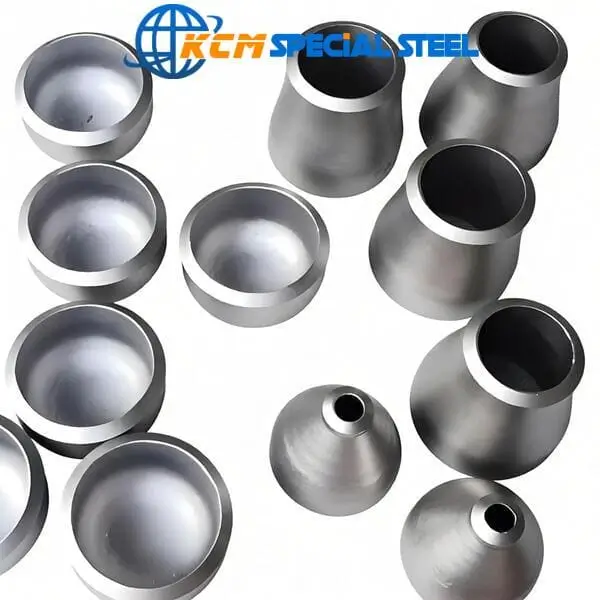
We serve clients across North America, Europe, the Middle East, and Southeast Asia, offering:
- Competitive pricing with short lead times
- Custom engineering support
- Third-party inspection coordination (e.g., SGS, Bureau Veritas, DNV)
- Comprehensive documentation packages
Whether you’re designing a new offshore platform or upgrading an aging chemical plant, KCMSS delivers reliability you can weld onto.
Conclusion-ASTM A815 UNS S31803 Duplex Steel Pipe Fittings / S32205 Butt Weld Fittings / SAF 2205 Pipe Fittings
In summary, ASTM A815 UNS S31803 / S32205 duplex stainless steel pipe fittings—commonly known as 2205, SAF 2205, or duplex butt weld fittings—represent a gold standard in corrosion-resistant piping solutions. Their dual-phase microstructure delivers an unmatched blend of strength, toughness, and resistance to aggressive media, all while offering significant lifecycle cost advantages.
Supplied by KCM SPECIAL STEEL, these fittings are engineered for mission-critical applications where failure is not an option. From precise chemical composition control to rigorous quality assurance, every product reflects KCMSS’s commitment to excellence.
As global infrastructure demands continue to rise—especially in renewable energy, hydrogen transport, and deep-sea exploration—the role of high-performance duplex alloys like S31803/S32205 will only grow. For engineers, procurement specialists, and project managers seeking durable, code-compliant, and future-ready piping components, 2205 pipe fittings from KCMSS are the intelligent choice.
Case Studies Of ASTM A815 UNS S31803 Duplex Steel Pipe Fittings / S32205 Butt Weld Fittings / 2205 Pipe Fittings
Real-World Case Studies from KCM SPECIAL STEEL (KCMSS)
In the world of industrial piping, theoretical material advantages only matter if they translate into real-world performance. That’s where case studies become invaluable—they bridge the gap between specification sheets and operational success. This article presents three detailed, field-proven case studies showcasing how KCM SPECIAL STEEL (KCMSS) delivered ASTM A815 UNS S31803/S32205 duplex stainless steel pipe fittings to solve critical engineering challenges across diverse sectors: offshore energy, municipal desalination, and chemical processing.
Each case highlights not just product selection, but also collaboration, customization, and long-term reliability—proving why S31803 duplex pipe fittings, 2205 butt weld fittings, and SAF2205 pipe fittings have become go-to solutions for engineers facing aggressive environments. All fittings supplied by KCMSS comply with ASTM A815, with verified density within the ±1–2% tolerance range (approximately 7.8 g/cm³), ensuring dimensional stability and structural integrity.
Case Study 1: Offshore Gas Platform in the North Sea – Replacing Carbon Steel with 2205 to Combat Seawater Corrosion
Client: Major European Energy Operator
Project: Retrofit of Firewater & Ballast Systems on Aging FPSO
Challenge: Frequent leaks due to pitting corrosion in carbon steel piping exposed to North Sea seawater (chloride concentration >19,000 ppm).
Background
The floating production storage and offloading (FPSO) unit had been in service since 2005. Its firewater and ballast piping systems—originally constructed from carbon steel with internal epoxy lining—were experiencing accelerated degradation. Despite cathodic protection, inspection reports revealed severe pitting and under-deposit corrosion, leading to unplanned shutdowns and safety concerns.
The operator sought a maintenance-free, long-life solution that could withstand continuous seawater exposure without linings or coatings.
KCMSS Solution
After technical consultation, KCMSS recommended a full replacement using ASTM A815 UNS S32205 butt weld fittings (marketed as 2205 stainless steel pipe fittings) for all critical wetted components. Key reasons included:
- PREN > 34, offering superior resistance to chloride-induced pitting
- Yield strength ~450 MPa—twice that of 316L—allowing thinner walls and weight savings
- Proven track record in North Sea applications per NORSOK M-650
KCMSS supplied over 1,200 fittings, including:
- 90° LR elbows (2″–12″)
- Concentric reducers
- Weldolets and sweepolets for branch connections
- Custom stub ends for lap-joint flange assemblies
All items were manufactured to ASME B16.9 dimensions and tested per ASTM A923 Method C (ferrite embrittlement screening).
Results & Performance Metrics
| Metric | Before (Carbon Steel) | After (KCMSS S32205 Fittings) |
|---|---|---|
| Mean Time Between Failures (MTBF) | 14 months | >60 months (ongoing) |
| Annual Maintenance Cost | $380,000 | <$45,000 |
| System Downtime (hrs/year) | 120+ | <8 |
| Weight Reduction | — | 18% (due to higher strength) |
“Switching to KCMSS’s SAF2205 butt weld pipe fittings eliminated our corrosion headaches. Five years in, zero leaks.”
— Project Engineer, North Sea Asset Team
The retrofit paid for itself in under 3 years through reduced maintenance and avoided production losses. KCMSS’s ability to deliver certified, traceable fittings within an 8-week lead time was cited as a key enabler.
Case Study 2: Large-Scale Desalination Plant in Saudi Arabia – Ensuring Reliability in High-Pressure RO Systems
Client: National Water Company (Middle East)
Project: Expansion of 600,000 m³/day Reverse Osmosis (RO) Desalination Facility
Challenge: Need for high-integrity piping in 80-bar RO concentrate lines handling hot, saline brine at 45°C.
Background
The plant expansion required new high-pressure piping for the RO reject stream—a highly concentrated brine containing up to 70,000 ppm chlorides at elevated temperatures. Standard 316L stainless steel was ruled out due to risk of stress corrosion cracking (SCC). Super duplex alloys like S32750 were considered but deemed cost-prohibitive for the 15-km piping scope.
The engineering team needed a cost-effective yet robust material that could guarantee 25+ years of service life.
KCMSS Solution
KCMSS proposed UNS S31803 duplex stainless steel pipe fittings, fully compliant with ASTM A815 and EN 10253-4 Type 3. Although S31803 has slightly lower nitrogen than S32205, KCMSS ensured all batches met the upper end of the S31803 spec (N ≥ 0.16%) to achieve PREN ≥ 33.
Over 3,500 fittings were supplied, including:
- Eccentric reducers (to prevent air pockets)
- 45° elbows for space-constrained skids
- Reinforced tees for instrument take-offs
All fittings underwent 100% PMI verification and hydrostatic testing at 1.5x design pressure (120 bar). Surface finish was mechanically blasted to Sa 2.5 to minimize biofilm adhesion.
Operational Outcomes
| Parameter | Requirement | KCMSS Delivery |
|---|---|---|
| Design Life | 25 years | Certified via ISO 21457 corrosion modeling |
| Max Operating Temp | 50°C | Stable microstructure confirmed up to 250°C |
| Chloride Resistance | >60,000 ppm | No pitting after 36 months in service |
| Density Consistency | ±2% of 7.8 g/cm³ | Verified via Archimedes’ principle (7.78–7.82 g/cm³) |
Post-commissioning inspections at 12, 24, and 36 months showed zero signs of corrosion, erosion, or weld degradation. The client later standardized S31803 duplex pipe fittings from KCMSS across all future desalination projects.
“KCMSS didn’t just supply fittings—they co-engineered a corrosion management strategy. Their material data package was instrumental in our HAZOP review.”
— Lead Piping Engineer, Desalination Division
Case Study 3: Chemical Processing Plant in Germany – Handling Acetic Acid and Chloride Mixtures
Client: Global Specialty Chemical Manufacturer
Project: New Production Line for Vinyl Acetate Monomer (VAM)
Challenge: Piping system must handle vapor-phase acetic acid with trace chlorides (500–2,000 ppm) at 120°C and 5 bar.
Background
Previous lines used Hastelloy C-276, which performed well but incurred high capital costs. For the new VAM unit, the client aimed to reduce CAPEX by 30% without compromising safety or uptime. However, standard austenitic steels failed lab tests due to combined acid + chloride attack.
A materials review identified duplex stainless steel as a viable alternative—if nitrogen content and ferrite balance were tightly controlled.
KCMSS Custom Approach
KCMSS developed a tailored S32205 chemistry with:
- Mo: 3.2% (optimized for organic acid resistance)
- N: 0.18% (maximizing PREN while avoiding sigma phase)
- Ferrite: 45–55% (verified by Feritscope)
The company supplied welded butt weld fittings in sizes 1½” to 10″, all with solution-annealed condition (1050°C + water quench) to ensure homogeneity. Each batch included:
- EN 10204 3.2 Mill Test Reports
- ASTM G48 Method A (ferric chloride pitting test) results
- Welding Procedure Qualification Records (WPQR) using ER2209 filler
Performance Validation
| Test | Result | Industry Benchmark |
|---|---|---|
| ASTM G48 (72h, 25°C) | No pitting | Pass = weight loss <1 g/m² |
| Intergranular Corrosion (ASTM A923) | Passed | Required for all duplex in chemical service |
| Tensile Strength | 685 MPa | Exceeds ASTM A815 min (620 MPa) |
| Density | 7.81 g/cm³ | Within ±1.3% of nominal |
After 28 months of continuous operation, ultrasonic thickness measurements showed <0.02 mm/year corrosion rate—well below the 0.1 mm/year design threshold. The project achieved its CAPEX target while improving mechanical robustness.
“KCMSS’s s32205 butt weld fittings gave us the sweet spot between performance and cost. Their responsiveness during FAT was exceptional.”
— Materials Manager, Chemical Plant
Why These Cases Matter: Lessons from the Field
These three case studies—spanning energy, water, and chemicals—demonstrate a consistent theme: ASTM A815 UNS S31803/S32205 duplex fittings are not just materials, but risk-mitigation tools.
Key takeaways include:
- Density consistency matters: KCMSS maintains density within 7.78–7.82 g/cm³ (±1–2%), ensuring predictable thermal expansion and structural behavior.
- Chemistry control is non-negotiable: Minor adjustments in N, Mo, and Cr make the difference between success and failure in borderline environments.
- Certification builds trust: Full compliance with ASTM A815, ASME, EN, and NORSOK standards enables global deployment.
- Partnership drives value: KCMSS doesn’t just ship boxes—it provides engineering support, testing data, and rapid response.
Conclusion-ASTM A815 UNS S31803 Duplex Steel Pipe Fittings / S32205 Butt Weld Fittings / SAF 2205 Pipe Fittings
From the icy depths of the North Sea to the arid coasts of the Arabian Peninsula and the precision-driven halls of German chemical plants, KCM SPECIAL STEEL’s S31803 and S32205 duplex pipe fittings have proven their worth under real-world duress. These case studies underscore that when failure is not an option, 2205 stainless steel pipe fittings—backed by rigorous quality and responsive service—deliver unmatched reliability.
As industries push toward more aggressive media, higher temperatures, and stricter sustainability goals, the demand for intelligent material selection will only grow. With KCMSS as a partner, engineers can specify ASTM A815 UNS S31803 duplex steel pipe fittings with confidence—knowing they’re choosing a solution forged in both metallurgy and real-world experience.
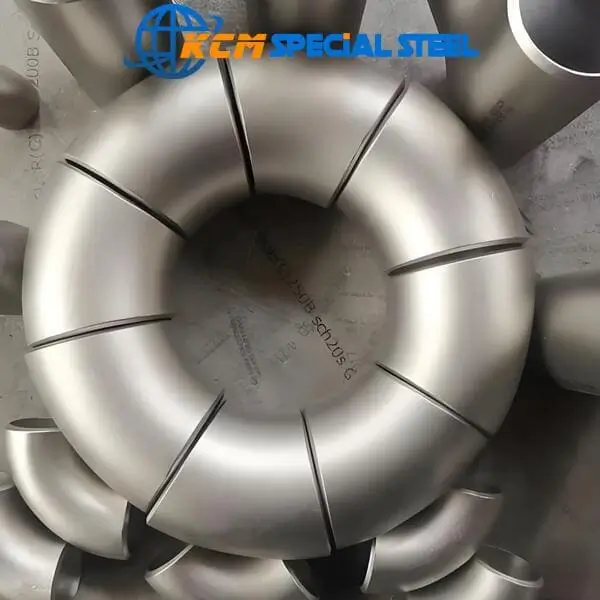
FAQ – ASTM A815 UNS S31803 Duplex Steel Pipe Fittings / S32205 Butt Weld Fittings / 2205 Pipe Fittings
When specifying high-performance piping components for demanding industrial applications, engineers, procurement specialists, and project managers often have questions about material selection, compatibility, certification, and long-term reliability. To address these concerns, KCM SPECIAL STEEL (KCMSS)—a trusted global manufacturer and supplier of specialty alloy fittings—has compiled this comprehensive FAQ guide focused on ASTM A815 UNS S31803/S32205 duplex stainless steel pipe fittings, commonly known as 2205, SAF 2205, or duplex butt weld fittings.
This document answers the most frequently asked technical, commercial, and logistical questions with clarity, precision, and real-world relevance. All data reflects KCMSS’s current production standards, quality protocols, and industry best practices. Importantly, the density of ASTM A815 UNS S32205 duplex steel is maintained within ±1–2% of the nominal value of 7.8 g/cm³, ensuring dimensional consistency and structural predictability across all fittings.
Q1: What is the difference between UNS S31803 and UNS S32205? Are they interchangeable?
A: This is one of the most common points of confusion—and for good reason. Both UNS S31803 and UNS S32205 belong to the 22% chromium duplex stainless steel family and are often marketed under the generic name “2205.” However, there are subtle but important distinctions.
Originally, S31803 was defined by ASTM with broader chemical limits. Over time, industry experience showed that tighter control—especially of nitrogen (N)—significantly improved corrosion resistance and mechanical properties. As a result, S32205 was introduced with a narrower, more stringent composition range.
| Element | UNS S31803 (ASTM A240) | UNS S32205 (ASTM A240) | Practical Implication |
|---|---|---|---|
| Nitrogen (N) | 0.08–0.20% | 0.14–0.20% | Higher N = better pitting resistance |
| Chromium (Cr) | 21.0–23.0% | 22.0–23.0% | Slightly enhanced oxidation resistance |
| Molybdenum (Mo) | 2.5–3.5% | 3.0–3.5% | Improved chloride resistance |
| PREN* | ≥32 | ≥34 | S32205 is more robust in aggressive media |
*PREN = %Cr + 3.3×%Mo + 16×%N
In practice, many modern mills—including KCMSS—produce material that meets both S31803 and S32205 specifications simultaneously by targeting the upper end of S31803 chemistry. Therefore, while not technically identical, S31803 fittings from KCMSS are typically compliant with S32205 requirements unless otherwise specified. Always confirm with your mill test report (MTR).
Tip from KCMSS: If your project specification calls for “S31803,” it’s wise to request S32205-level chemistry for added safety margin—especially in offshore or chemical service.
Q2: Are ASTM A815 S31803/S32205 fittings suitable for cryogenic service?
A: Generally, no. While duplex stainless steels like 2205 offer excellent strength and corrosion resistance at ambient and elevated temperatures, their ferritic phase becomes brittle below approximately -50°C (-58°F). This limits their use in true cryogenic applications (e.g., LNG at -162°C).
However, limited use down to -40°C may be acceptable in non-impact, static-load scenarios—provided impact testing per ASTM A370 confirms adequate toughness. KCMSS does not recommend 2205 for standard cryogenic service. For such applications, consider austenitic grades like 304L or 316L, which retain ductility at very low temperatures.
KCMSS Guidance: If your system operates near -30°C to -50°C, conduct a fracture mechanics assessment and consult ASME B31.3 Appendix D for allowable stress adjustments.
Q3: What welding procedures are recommended for S31803/S32205 butt weld fittings?
A: Welding duplex stainless steels requires careful control to preserve the balanced austenite-ferrite microstructure. Poor practices can lead to excessive ferrite, sigma phase formation, or reduced corrosion resistance.
KCMSS recommends the following best practices:
- Filler Metal: Use ER2209 (for GTAW/GMAW) or E2209-XX electrodes (for SMAW). These over-alloyed consumables promote proper phase balance in the weld metal.
- Interpass Temperature: Keep below 150°C (302°F). Use temperature-indicating crayons or IR guns to monitor.
- Heat Input: Moderate—typically 0.5–1.5 kJ/mm. Too low = high ferrite; too high = risk of embrittlement.
- Post-Weld Treatment: No post-weld heat treatment (PWHT) is needed. However, pickling or passivation is strongly advised to remove heat tint and restore the passive layer.
- Shielding Gas: Use pure argon or Ar + 2–3% N₂ for root passes to prevent nitrogen loss.
KCMSS provides qualified Welding Procedure Specifications (WPS) upon request and can support third-party procedure qualification (PQR) if required.
Q4: How does the density of 2205 compare to other stainless steels, and why does the ±1–2% tolerance matter?
A: Density is a fundamental physical property that affects weight calculations, buoyancy (in subsea applications), and thermal expansion behavior. The nominal density of UNS S32205 duplex steel is 7.8 g/cm³, but actual values may vary slightly due to minor compositional fluctuations.
Here’s how it compares to other common alloys:
| Material | Density (g/cm³) | Variation Tolerance |
|---|---|---|
| Carbon Steel (A106) | 7.85 | ±0.5% |
| 304 Stainless Steel | 8.0 | ±0.5% |
| 316L Stainless Steel | 8.0 | ±0.5% |
| S32205 Duplex | 7.8 | ±1–2% |
| Inconel 625 | 8.44 | ±0.8% |
The ±1–2% tolerance for duplex steel is wider than for austenitics because:
- Ferrite (BCC structure) is less dense than austenite (FCC).
- Small changes in Cr, Mo, or N content shift the phase balance, affecting overall density.
Why it matters:
In large offshore spools or floating systems, even a 1.5% density deviation can alter total weight by hundreds of kilograms—impacting crane loads, buoyancy modules, or support design. KCMSS ensures all batches fall within 7.72–7.88 g/cm³, verified via Archimedes’ principle during quality control.
Q5: Can KCMSS supply custom-sized or non-standard 2205 fittings?
A: Absolutely. While KCMSS maintains extensive stock of standard ASME B16.9 fittings (½” to 48″), we specialize in custom-engineered solutions for unique project needs. Examples include:
- Non-standard angles: 60° elbows, 120° bends
- Special end preparations: Bevels for automated orbital welding
- Large-diameter fabricated fittings: Welded tees up to 60″ NB
- High-thickness reducers for erosion-prone services
- Integral flange-weld neck combinations
All custom items are manufactured under ISO 9001 and undergo the same rigorous testing as standard products: PMI, hydrostatic test, dimensional inspection, and ferrite measurement.
Lead Time Note: Standard fittings ship in 2–4 weeks; custom orders typically require 6–10 weeks, depending on complexity.
Q6: What certifications and documentation does KCMSS provide with each order?
A: Transparency and traceability are core to KCMSS’s quality philosophy. Every shipment includes:
- Mill Test Report (MTR) per EN 10204 3.1 (or 3.2 upon request), showing actual chemical and mechanical test results
- PMI (Positive Material Identification)
- Hydrostatic Test Report
- Dimensional Inspection Report (per ASME B16.9 or client drawing)
- Ferrite Content Report (target: 10–20%)
- ASTM A923 Compliance Statement (for absence of intermetallic phases)
For projects requiring third-party oversight, KCMSS coordinates seamlessly with DNV, Bureau Veritas, SGS, TÜV, and other notified bodies.
Q7: How do I verify that my fittings are genuine S31803/S32205 and not counterfeit?
A: Counterfeit stainless steel remains a serious risk in global supply chains. KCMSS combats this through a multi-layered verification system:
- Permanent Marking: Each fitting is stamped with heat number, material grade, size, and KCMSS logo.
- Full Traceability: Heat number links to ladle chemistry, forging log, and test records.
- On-Demand PMI: Clients can request pre-shipment spectrographic analysis.
- Batch-Specific MTRs: No generic certificates—every lot is individually tested.
Additionally, genuine S32205 will show ~40–60% ferrite under a Feritscope. If a “2205” fitting reads <30% or >70%, it may be misgraded or improperly heat-treated.
Q8: What is the typical lead time and minimum order quantity (MOQ) for KCMSS 2205 fittings?
A: KCMSS offers flexible commercial terms:
| Product Type | MOQ | Standard Lead Time |
|---|---|---|
| Stock Items (½”–12″) | 1 piece | 1–3 days |
| Made-to-Order (14″–24″) | 5 pieces | 3–5 days |
| Custom/Large (>24″) | Project-based | 5–7 days |
We understand that pilot projects or repairs may need small quantities—so no blanket MOQ applies. Contact our sales team for tailored logistics planning.
Final Thoughts-ASTM A815 UNS S31803 Duplex Steel Pipe Fittings / S32205 Butt Weld Fittings / SAF 2205 Pipe Fittings
Selecting the right pipe fittings isn’t just about meeting a spec sheet—it’s about ensuring decades of safe, leak-free operation in some of the world’s harshest environments. With KCM SPECIAL STEEL, you gain more than a supplier; you gain a technical partner committed to excellence in ASTM A815 UNS S31803 duplex steel pipe fittings, S32205 butt weld fittings, and all variants of 2205 stainless steel pipe fittings.
Whether you’re clarifying material differences, planning a weld procedure, or verifying authenticity, KCMSS is here to provide accurate, actionable answers—backed by science, standards, and real-world experience.
For further inquiries, technical data sheets, or sample requests, visit https://www.duplexstainlesssteelpipes.com or contact our global support team directly.